


This article examines the political and socio-economic dynamics of Mauritania, while discussing the forthcoming Presidential elections and forecasting which candidate is poised to stake the strongest claim. It goes on to reveal that the incumbent President Ould Ghazouani remains the clear favorite to win the 2024 election for his second term in office.
WEST AFRICA CONJUNCTURE: Country Study Series -Mauritania 2024
STUDY REPORT No.12
Mauritania’s Presidential Elections will take place on Saturday June 29, 2024, in the context of major political and historical changes. After a peaceful transfer of power in 2019, Mauritania, which has a history of military takeovers and authoritarian rule since independence, started down a slow road towards bourgeois democratic freedom. The country is entangled with multiple challenges including human rights discrimination, high unemployment rate, economic dependency on extractive industries and limited diversification, issues of corruption, as well as inadequate public facilities and services. Some of these dire issues have featured significantly in the electoral campaigns of the presidential candidates as the results will have profound implications for the country’s future political, economic, and social landscape.
This article examines the political and socio-economic dynamics of the country discussing the forthcoming elections and forecasting which candidate is poised to stake the strongest claim. Part One of the article provides a concise historical overview of the country, while Part Two focuses on the upcoming elections. The article forecasts that Mohamed Ghazouani is most likely to assert a dominant position in the forthcoming presidential elections, citing his government’s seemingly successful implementation of socio-economic reforms during his initial term as the primary reasons.
The current President, Mohamed Ould Cheikh Ghazouani, is contesting for a second and final 5- year term as the flagbearer of his El Insaf party after leading the first peaceful transfer of power. During his first tenure of office President Ghazouani provided some stability from the uprising of jihadists. As such, the country has since not experienced any attack, although her neighbouring Mali has been hit with a series of attacks. His true to his fight against jihadism has sunk well with his people and earned him some popularity. Additionally, President Ghazouani’s seemingly fight against corruption has been one of his strong points. Corruption had been an issue in the history of Mauritania, but since 2019 a significant progress has been made in this regard. One vivid example was the case made by the present government against President’s Ghazouani’s predecessor General Abdel Aziz. The former President was charged with corruption and later sentenced to 5 years in prison in a special anti-corruption court in December 2023. Moreso, the current president has shown great commitments to eradicate poverty from Mauritania through his socio-economic policies. These policies have seen the government distribute food and money to very poor communities throughout the country.
President Ghazouani faces opposition from 6 other candidates in this year’s election. Notable candidates include Hamadi Ould Sid’ El Moctar, Biram Ould Dah Ould Abeid, and Outouma Soumare.
Biram Ould Dah Ould Abeid is an anti-slavery activist and human rights advocate who is renowned for his unwavering opposition to social injustice and slavery. He is also allied to the Arab nationalist Sawab. Biram Abeid is the most notable opposition and was the runner-up in the 2019 elections securing 19% of the votes. He is often referred to as the ‘Mauritanian Nelson Mandela’ due to his fight and commitment to exterminate slavery. He has massive support from the descendants of slaves, a community to which he belongs. Biram Abeid’s fight against racism, slavery and torture headlines his main campaign message. Although slavery has been abolished in Mauritania since 1981, it is still practiced illegally amongst some citizens of the country. Thus, Abeid’s mission is to eradicate the canker of slavery practices in the country when voted into power. His campaign, which calls for drastic changes to address systematic inequality, poses a serious threat to the current status quo.
Hamadi Ould Sid’ El Moctar is the leader and flagbearer of the Islamist Party, Tawassoul. His campaign messages centre around a strict application of Islamic laws which he has consistently pointed out would give hope and create wealth for the people of Mauritania. The Islamist Party, Tawassoul won 11. Hamadi Moctar and his party have their hold in the south of the capital, Nouakchott and this hold gives him hope to stake a claim in the presidency.
Outouma Soumare who is a neurosurgeon is contesting as an independent candidate. Similarly, Mohamed LeMine Ould El Mourteji Ould El Wavi, an accountant, is also contesting as an independent candidate. El id Ould Mohameden is deputy of the National Assembly and currently contesting on the party of the Republic Front for Unity and Democracy (RFUD). Mamadou Bocar Ba is also on the ticket of the Alliance for Justice and Democracy.
Since the introduction of multiparty politics, the party with a stronger representation in Parliament has always had an edge over the others. The President’s party, El Insaf won 107 seats out of the 176 seats contested in the legislative elections held on May 2023, making his party the majority. Currently, the other parties are weak and lack the organizational capacity and resources to marshal campaigns and challenge the ruling party.
PART ONE: SOCIO-ECONOMIC OVERVIEW OF MAURITANIA
Before delving into the upcoming elections, it is important to provide a brief overview of Mauritania, including its socio-economic dynamics, as these factors significantly influence voters’ choices and shape citizen expectations from the government.
In the midst of abundant resources, Mauritania-like most other African countries- grapples with significant socio-economic challenges, prominently marked by high levels of politics of identity, ethno-racial discrimination, persistent unemployment and poverty. This part of the study explores the socio-economic dynamics of the country, particularly the challenges of the people.
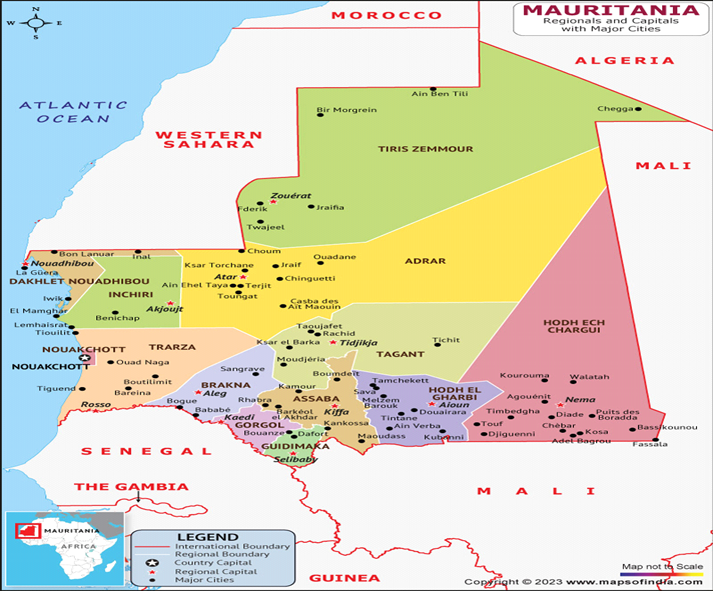
Mauritania is the 11th-largest country in Africa. It has 90% of its landscape in the Sahara, about ¾ of the country is desert and about fourteen (14) of its regions lie in the sub-tropical desert. The south is mostly tropical and that is where the majority of the population lives. Mauritania shares border with Mali to the east and southwest; the Atlantic Ocean to the west; Western Sahara to the north and northwest; Algeria to the northeast; and Senegal to the southwest.
Mauritania is excessively dry due to insufficient rainfall, however, more than half of the population (about 65%) largely depend on agriculture (food crops and livestock) for their survival. The country has an enormous territory of about 1,030,700km2 (397,955sq. miles). It has four main agro-climatic zones. The arid, which is the largest, occupies about 80% of Mauritania’s territory. The temperature is mostly high, ranging between 250C and 350C; whereas rainfall is low, mostly between 500mm and 600mm, and there is frequent drought. The zone, however, supports the production of date palm as well as irrigated vegetables. The south-east of Mauritania is predominantly sahelian. This Sahelian zone has both dry and rainy seasons. The inhabitants in these areas mostly engage in subsistence farming of sorghum, millet and millet. Another important area is the Senegal River Valley which is dominated by livestock production, irrigated agriculture as well as rain fed crops such as rice, maize and sorghum. The final zone is the maritime zone which covers a coastal strip of about 50km wide, ranging from Nouadhibou to the delta of the Senegal River. The temperatures are typically lower in this area, thus making agricultural activities a bit challenging.
Mauritania’s population is less than five million. The country is characterized by a diversity of ethnic groups, including mixed group of Berbers and Arabs, Sub-Saharan Africans, and Moorish communities. This diversity influences social interactions, cultural practices, and political dynamics within the country. Approximately 40% of the population identifies as Moors, while the remaining populace includes ethnic groups such as Wolof, Fulani, and Soninke.
Source: Map of India
Mauritania has a prolonged history of military coups and authoritarian governance. The first President of Mauritania, after independence in 1960, was Mukhtar Ould Daddah. He ruled in a one-party regime, just like most African countries during that era, until 1978 when he was removed. Between 1978 and 2019 every leadership change was realized by a coup, and almost every Head of State was an active or retired military officer. In 1991, Colonel Ould Taya, the then Head of State, consented to embrace an unprejudiced constitution. The constitution highlighted that there would be a maximum of two terms for a Head of State, with each term consisting of 5 years each. It also allowed for multi-party elections. However, Colonel Taya was also ousted in 2005. The military junta eventually decided on municipal, legislative and presidential elections in 2006 after which a civilian, Sidi Ould Cheikh Abdellahi, was elected president in 2007. Just months into his tenure as Head of State he was removed through a coup by General Ould Abdel Aziz. The General then conducted and won the 2009 and 2014 presidential elections while his party, the Union for the Republic (UPR), won every regional, legislative and local election. In 2019, General Ould Ghazouani, a close friend of General Ould Abdel Aziz under the UPR won the election with 52% of the votes and that marked the first ever peaceful transition of leadership in Mauritania. From this juncture, Mauritania began building a more diverse and stable political system. Despite this considerable political stability, the country is still entangled with obstacles including human rights discrimination, high unemployment, and corruption.
It is in this vein that the outcome of the 2024 elections is expected to challenge the status quo, strengthen democratic institutions, improve political stability, and pave the way for significant socio-economic development.
Even though Mauritania has a vast portion of its landscape being desert, a harsh Sahelian climate and a low population density, the country is also resource endowed.
Mauritania has extensive natural resources, among which include gold, iron ore, copper, petroleum and phosphate rock. The country also has large deposits and reserves of gypsum, hydrocarbons as well as fisheries. Additionally, crude oil, tantalum and natural gas are under exploration.
The major drivers of the economy are extractive industries, such as oil and minerals, agriculture and fisheries. The iron ore, gold, oil and fishery sectors all together generate about seventy per cent (75%) of the country’s revenues. The United Arab Emirates, France, the United States, China and Spain are among Mauritania’s most important trading partners. Most of the Foreign Direct Investment (FDI) comes from France, which has historically strong neo-colonial economic and political ties with the country. There are about 50 French companies operating in Mauritania among which are Total Energies, Société Générale, BPiFrance, Moulins de l’Atlas and Cimentrie du Sahel.
The primary destination for Mauritania’s fish exports is Spain. Again, some of the U.S. food processors provide local value-added processing before fish products are shipped; while a considerable chunk of the catch is exported to Europe and Japan without being processed or offloaded in Mauritania. In similar vein, some Turkish and Chinese companies turn an increasing portion of the catch into fishmeal for export to China.
As usual, Kosmos Energy has presence in a lot of African countries and Mauritania is no exception. The company has a long-term contract for producing Mauritania’s crude oil and natural gas. Kinross Gold and Quantum Minerals are responsible for majority of the copper and gold mining projects in Mauritania
Although the economy is heavily reliant on extractive industries, primarily iron ore mining and fisheries, these sectors employ relatively few people compared to their contribution to GDP. In the long run, the situation has contributed to the socio-economic problems of the country including limited job creation opportunities, high rate of unemployment and rural migrants. Also, the young graduates who are unable to secure formal employment turn to compete with others in the informal sector for their livelihoods. The overall unemployment rate stands at approximately 11%, with youth unemployment notably higher at around 21%. The overdependence of a large portion of the population on the informal sector contributes to the perpetuation of cycles of poverty and economic vulnerability among the people of Mauritania.
Moreso, the economy of Mauritania is oligopolistic by nature. Thus, the key sectors of the economy, comprising fishery, importation and exportation of consumer goods, banking, insurance, public infrastructure, telecommunication, and dominant conglomerates, are controlled by a few cartels or businessmen and their families. These dominant oligarchs mostly belong to the Bidhan ethnicity or tribes. Some of the popular names include Bahay Ould Gadda, Ould Boaumatou, Ould Abdellahi and Abdou Maham. Mohamed Abdellahi Ould Yaha is the president of logistics company, Maurilog. Maurilog is a leading mining, energy, as well as Oil and Gas services provider that has been operating in Mauritania for over twenty years. The conglomerate also controls transport, integrated logistics and waste management services in the country. Again, Ould Boaumatou is an entrepreneur and the owner of the famous Général de Banque de Mauritanie (GBM), Mauritania’s first private bank; the owner of Mauritania’s first mobile phone company; and a shareholder in various domestic and international companies which are into insurance, cement production and healthcare. Similarly, Abdou Maham is the founder of the Bamis, which is Mauritania’s first Islamic bank. The tycoon is also the power behind the local branch of World Muslim League, within which are found traditionalists Islamists and pious Sufi entrepreneurs.
Mauritania grapples with high levels of poverty, but those in the rural areas and marginalized communities are the most affected. According to World Bank data, nearly 31% of the population lives below the national poverty line. There exists a pronounced gap in living standards between urban centers, such as Nouakchott and Nouadhibou, and rural regions. Urban areas typically benefit more from economic activities, infrastructure development, and access to public services, whereas rural populations often lack basic amenities and face greater challenges in securing livelihoods.
The canker of pervasive human rights discrimination is reflected in the areas of slavery, ethno-racial discrimination, gender inequality as well as marginalization of minority groups. The canker has contributed to the issue of politicization of identities, under-representation and unequal access to socio-economic opportunities.
Two communities comprising the non-Arabic -speaking ethnic groups and the Haratins continue to be victims of ethno-racial discrimination. The non-Arabic-speaking ethnic groups occupy along the borders of Senegal and Mali. They include Wolof, Haalpulaar, Bamana and Sooninko. These groups have been labelled as ‘black Africans’ and per their black African background identity suffer various levels of discrimination in terms of access to economic opportunities and education. The Haratins have also been labelled as ‘freed slaves’ or ‘black Moors’. They are usually treated as second-class citizens, unlike their fellows, the Berbers or ‘White Moors’ who are regarded as indigenous to Mauritania. Again, they are stigmatized for having served the prominent Bidhan families in the past as well as modern informal slaves. This problem of politicization of identities poses barriers to the Haratins as they are usually marginalized socially, economically and politically. For instance, access to high-ranking public offices and strategic ministries remains a big challenge for the Haratin and the non-Arabic-speaking ethnic groups.
Slavery in the form of chattel continues to be practised in Mauritania. This form of chattel slavery means that slaves are secretly sold or rented out when their masters are in need while others are also given out as gifts just like goods. In this way, the slaves as well as their descendants would remain the full property of their masters and so children born by the slaves also become slaves of their parents’ masters. Thus, in Mauritania children born by slaves are said to be literally born into slavery as well. In 2007, slavery was criminalized by the government. Despite the abolition and subsequent criminalization, victims of slavery find it difficult to get justice; one of the major reasons being that the criminal justice system (the judiciary and police) is dominated by the slave-owning classes.
In 2022, when the overall population of Mauritania was 4.73million, the female population was 2.41million whereas the male population was only 2.32 million. However, whereas the rate of literacy for females was 43.5%, that of their male counterparts was compared to 63.7%. In general, access to education for females is very low. This also affects the rate of employment for females. In the formal job market for example, women comprise only 30.7% of the labor force. Again, young girls are married off by their families while they are still underage. The practice of Female Genital Mutilation has not completely stopped although the practice has been prohibited. A nationwide Demographic and Health Survey conducted between 2019 and 2021 showed that 77% of women in the rural areas and 51%of women in the urban centres had been subjected to the practice.
Civil Rights Movements/Civil Society Organisations
The nature of oppression and discrimination against marginalised groups has always required a fight back other from the victims or from societies or groups well positioned to fight on behalf of the victims. The most notable activists and advocacy organisations include that IRA Movement, the ‘Touche Pas à Ma Nationalité (TPMN), which is translated in English as ‘Touch not my Nationality’ as well as the Association of Female Heads of Households.
The Initiative pour la Resurgence du Mouvement Abolitionniste (IRA) Movement is an anti-slavery movement fighting for the rights of the Haratins. Rather unfortunately, some of the IRA members who became too vocal in the fight for dignified lives for their members have been reportedly harassed and repressed by security forces; while some others have been arrested and prosecuted. Recently, the movement has managed to transform into a political party known as the RAG. However, the government has refused to officially authorize the party’s existence.
The Touche Pas à Ma Nationalité-TPMN- is a black African organisation which exists to fight against all forms of oppression against the Haratin. Through the TPMN’s efforts, some military personnel who had a history of committing atrocities against black Africans were prosecuted and jailed. However, in 2022 some of these jailed military personnel were granted amnesty by the government. In effect, the TPMN organisations took to the streets to denounce the amnesty but several of them were arrested.
In the same vein, there exists the Association of Female Heads of Households which fights for the rights and dignity of women and children. However, just like the IRA and TPMN, leaders and members of the Association have not been spared the repression and suppression of such vociferous groups. For example, in 2022, Aminetou Mint El Moctar, the association’s leader, was reportedly attacked right at a police station by one man just because the Association was legally representing a minor who accused the man of sexual aggression.
In general, the media is regulated by the High Authority for the Press and Audiovisual Sector. The vulnerability of this Authority makes it easy for government to have its influence over the media and press freedom. For instance, three out of the six board members of the Authority are appointed by the President, whereas the other three are appointed by Parliament. In fact, there have been cases of harassment of media personalities who have been tagged as being overly critical of government and this raises so much concern about press freedom and freedom of expression. In 2021, the Minister of Social Affairs accused Journalist Abdellahi Mohammed Ould Atigh of defamation for criticizing the minister over allegations of diverting funds which was meant to support vulnerable during the Coronavirus pandemic. The journalist was then arrested and detained for two days. One blogger by name Hamda Oubeidallah was also arrested and given a six-month prison sentence for criticizing the government with his Facebook video posts.
PART TWO: PRESIDENTIAL ELECTION IN MAURITANIA
Part Two presents a holistic and thorough analysis of each candidate’s political history, vision, campaign message and their respective manifestoes. It also provides some deep insights into the nuanced political climate of this upcoming election.
President Mohamed Ould Cheikh Ghazouani is contesting for a second and final 5-year term as the flagbearer of El Insaf Party. He is a retired Army General and the candidate of the Union pour la République (UPR) party. Ghazouani is the first democratically elected and active President of Mauritania currently. He was sworn into power in 2019 after the country made a political paradigm shift from a coup-based dictatorship to a legislative bourgeois democratic election. This marked the country’s first peaceful transition of power since its independence. During the election, Mohamed Cheikh El Ghazouani won by dominating 52% of the total votes representing the majority despite many controversies surrounding this victory proposed by the opposition.
President Ghazouani was General Ould Abdel Azziz’s collaborator in the ousting of former president Abdellahi in the 2005 coup. In Ghazouani’s bid to obstruct the influence of his friend (former Head of State) on the UPR party and consolidate his stronghold and authority on the party, he rebranded the UPR party and named it ‘El Insaf’ meaning ‘Equity’. He put these obstructions in place as soon as Ould Azziz portrayed a strong desire to maintain some influence over the party. Ghazouani has nonetheless maintained a close grip on the state apparatus as well as the inner workings of the party.
Ghazouani is contending with six prominent opponents in the upcoming Presidential elections. Despite the strong opposition, he is deemed to claim the highest stake in the elections.
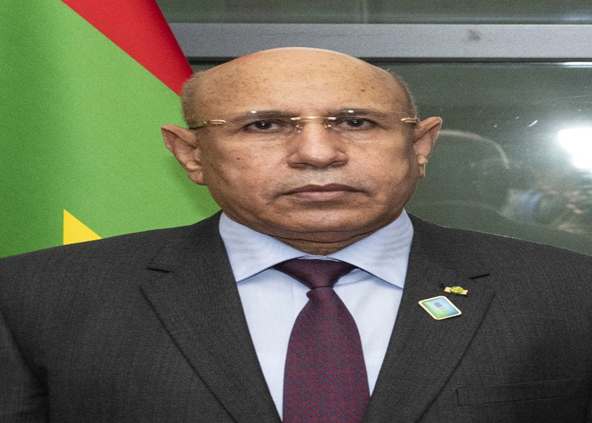
President Mohamed Cheikh El Ghazouani of Mauritania has prioritized governance reform, economic diversification, security enhancement, and diplomatic engagement since he came to power in 2019.
One of the reasons is that his administration has implemented anti-corruption measures to enhance transparency and accountability. Corruption had been an issue in the history of Mauritania, but since 2019 a significant progress has been made in this regard. One notable pace set by Ghazouani is when he permitted the National Assembly to set up a committee to investigate corruption charges against his predecessor and former collaborator General Azziz. The former president has since December 2023 been sentenced to 5 years in prison by the special anti-corruption. While the public views Ghazouani’s act as a right direction towards the fight against corruption, members of the opposition consider the action as a deliberate attempt to impede his influence in government.
Again, concerning the barriers to equality, human rights discrimination and slavery, General Ghazouani is noted to have taken a more overt approach in addressing the issues than any of his predecessors. In the first place, the government openly directed magistrates and judicial police officers to strictly enforce the laws against slavery. Additionally, three criminal courts have been fortified to exclusively focus on cases involving slavery. Furthermore, during his first tenure, the government granted an official recognition to the IRA (the leading association that defends the rights of Haratin). As noted earlier, the IRA was for several years deemed illegal and several of its leaders and members have faced persecution for a long time. The most renowned activist, Biram Dah Abeid, ran in the 2019 presidential election. However, in December 2021, Ghazouani’s administration granted the Association an official authorization. Many consider the move as a positive additional tool for the defense of the most oppressed minority in Mauritania. Moreso, violations of civil rights have reportedly declined considerably.
Still regarding socio-economic and cultural marginalisation of minority groups and rural folks, President Ghazouani continue to put up efforts to address their challenges. The President has also shown great commitments to eradicate poverty and hunger from Mauritania through his socio-economic policies. These policies have seen the government distribute food and money to very poor communities and among marginalised ethnic groups throughout the country. In addition to that, the government has incorporated minority ethnic languages in the education system so as to improve literacy among them and also encourage their enrolment. In the past, such openness and acceptance of minority languages would have been considered unimaginable. About seventy-eight per cent (78%) of the population reportedly now have access to basic drinking water compared to forty per cent (40%) in previous years. These people include those in desert areas.
Security enhancement has been one of General Ghazouani’s priorities and accomplishments. His government has expanded the roads, customs offices and security infrastructure especially at the border regions near Mali, Morocco and Algeria. In his first tenure of office, Ghazouani has provided stability from the uprising of jihadists.
Economically, he has focused on diversifying beyond agriculture and natural resources. However, his promotion of private sector growth continues to give dominance to the oligarchs and the elite in the country. This direction would continue to concentrate wealth in the few dominant Bidhan elite while the working class continues to stagger in poverty and inequality.
Mohamed Lemine El Mourtaja El Wavi
Mohamed Lemine El Mourtaja El Wavi has become a key player in Mauritania’s politics, bringing with him a new outlook and a strong dedication to changing his country. He is a senior Treasury official in the country who has a deep-seated concern for the country’s security, education, and national cohesion.
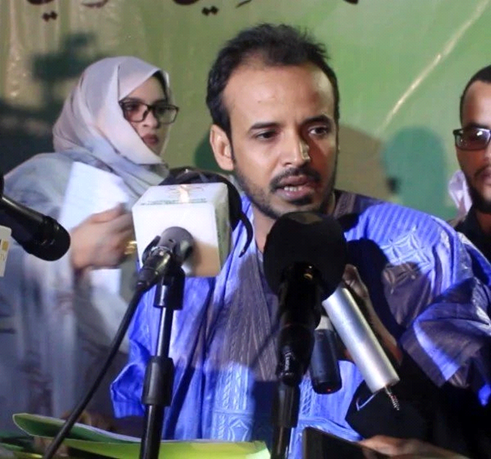
Mr. El-Wavi’s candidacy is centred around an audacious plan for educational reform. According to him, the existing system is polarizing since it divides pupils according to their financial and racial backgrounds, weakening national unity. By guaranteeing that every Mauritanian child, regardless of background, receives a top-notch education, his suggested changes seek to tear down these barriers.
His candidacy symbolizes a broader movement towards inclusivity and youth empowerment in Mauritanian politics. Recognizing a lack of youthful representation, he has leveraged social media and grassroots networks to mobilize a new generation of Mauritanians.
Just like most of the bourgeois politicians in the country, El-Wavi’s has been an advocate for his country’s active involvement in regional initiatives like the G5 Sahel and strategic partnerships with wealthier states like the United States and France. He thinks that such partnerships would help improve Mauritania’s security and preserve its sovereignty.
Hamadi Sidi El Mokhtar Mohamed Abdi
With the National Rally for Reform and Development (Tawassoul) party preparing to run for president in 2024, Hamadi Sidi El Mokhtar Mohamed Abdi has become a prominent figure in Mauritinanian politics. With a platform that unites Islamic values with a dedication to social justice and thorough reform in all relevant areas, his candidacy marks a turning point in Mauritania’s political history.
Abdi’s political path is firmly anchored in the ideals of the Tawassoul party, which is well-known for its support of social change and Islamic-oriented policies. He represents a commitment to using Islamic principles as a compass for governing and revitalizing the country of Mauritania.
Several major subjects that are very relevant to Mauritanian society are at the center of Abdi’s campaign. In order to strengthen Mauritania’s cultural and religious identity, he places a strong emphasis on the restoration and rehabilitation of religious experts, imams, jurists, and religious institutions. Abdi also emphasizes the adoption of legislation, motivated by Islamic precedents throughout history, that safeguard and improve the status of women. He also promises to vigorously fight corruption and rebuild trust in the legal system to guarantee justice and equity for all Mauritanians.
Abdi pledges to develop substantial work possibilities and put supportive policies in place to encourage Mauritanian youth’s ability to be change agents by promoting their professional development and social contribution. He offers significant reforms while acknowledging the difficulties facing Mauritania’s healthcare and education systems.
Abdi also highlights the critical role of the national armed forces in safeguarding
Mauritania’s sovereignty. He pledges to enhance their capabilities through increased salaries and equipping them with necessary resources to effectively fulfill their duties.
The launch of Abdi’s campaign in Nouakchott was marked by enthusiastic support from party leaders and grassroots supporters. When voted into power, Abdi intends to address fundamental issues that resonate deeply with Mauritanian voters, including religious identity, social justice, economic empowerment, and national security.
Otouma Antoine Souleimane Soumare
Otouma Antoine Soumare has entered the political spotlight as a candidate for the 2024 presidential elections in Mauritania, launching his campaign from Nouadhibou’s Zone 1, a symbolic start to his bid for national leadership. Central to Soumare’s campaign is a commitment to overhaul essential services across Mauritania. He has pledged comprehensive improvements in water and electricity supply, healthcare, and education, aiming to ensure that every Mauritanian has access to decent living standards, including housing and employment opportunities. His promises resonate with the aspirations of his supporters in Nouadhibou, who eagerly anticipate transformative change under his leadership.
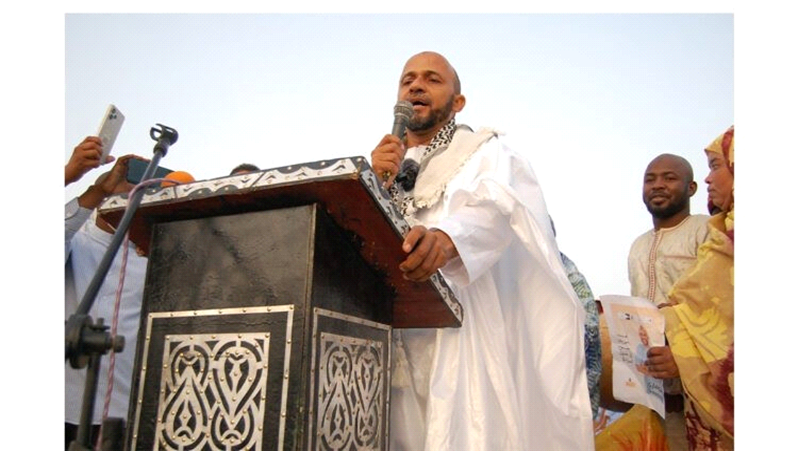
Support for Soumare’s candidacy in Nouadhibou has been robust. Otouma Antoine Soumare’s candidacy represents a pivotal moment in Mauritanian politics, characterized by a bold vision for reform and a commitment to addressing fundamental societal challenges. As the election date approaches, Soumare and his supporters are determined to mobilize widespread support and usher in a new era of governance that meets the aspirations of all Mauritanians.
Mamadou Bocar Ba emerges as a prominent contender in Mauritania’s 2024 Presidential elections, representing the Alliance for Justice and Democracy and Movement for Reconciliation (AJD/MR). Born in 1954 in Maghama, Ba’s journey from academic pursuits in Morocco to political activism and leadership spans decades marked by resilience, advocacy for human rights, and a commitment to social justice.
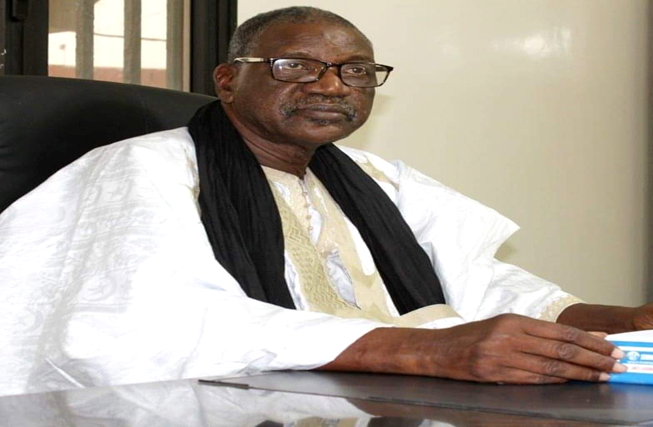
Ba’s political trajectory was shaped significantly by his involvement in the African Liberation Forces of Mauritania (FLAM), a movement dedicated to abolishing slavery and promoting equality among Mauritania’s diverse communities. His activism led to imprisonment in 1986, followed by exile in Senegal and France, where he continued his advocacy for Mauritanian refugees and democratic reforms.
Ba has pledged to enact sweeping reforms aimed at fostering a strong and democratic state where every citizen, regardless of background, can enjoy fundamental rights, security, and economic prosperity. Central to his agenda are initiatives to promote national languages, ensure equitable land ownership, and enhance social cohesion through inclusive governance practices.
El Id Mohameden M’Bareck, the candidate for the 2024 presidential election representing the Union of Salvation Forces (UFS), launched his campaign with a significant rally at the old Nouakchott airport square. Born in 1979 in Nouakchott, M’Bareck has built a career that straddles both law and politics, making him a prominent figure in Mauritanian public life.
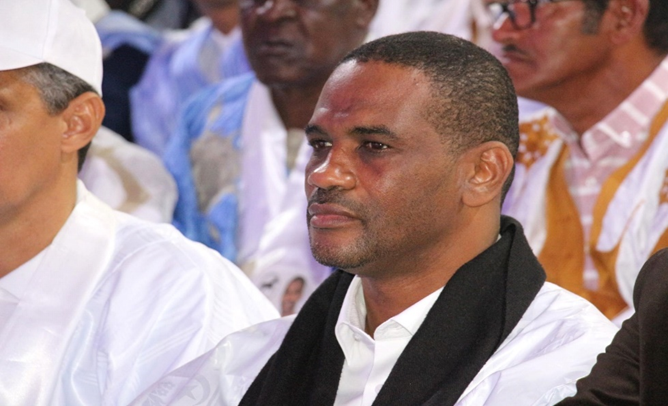
M’Bareck’s political journey is underpinned by a deep commitment to social justice, human rights, and national unity. His professional milestones include serving as a lawyer since 2006, being a member of the Bar Association’s Council responsible for public freedoms and human rights in 2007 and holding various significant positions in the Mauritanian government. Notably, he has been a member of the National Assembly since 2018, the general rapporteur of the budget in 2020, and a member and vice-president of the Supreme Court in 2021.
His political career is complemented by his activism. M’Bareck has been a legal advisor and litigation manager for the SOS Esclaves Association since 2011, advocating against slavery and for the rights of marginalized communities. In 2015, he was an expert trainer for the new national mechanism for the prevention of torture. He also led the Manifesto for the political, economic, and social rights of the Haratins, advocating for a united and egalitarian Mauritania.
M’Bareck has outlined a comprehensive electoral program focusing on essential reforms in health, agriculture, and infrastructure. He has emphasized the need to protect farmers and ensure water supply for all citizens. Highlighting the importance of Mauritania’s natural resources, he has proposed creating industrial and mining companies to safeguard and optimize the exploitation of mineral wealth, particularly protecting gold miners across the regions. The fisheries and maritime economy sectors also feature prominently in his plans, with proposed reforms aimed at improving industrial practices.
M’Bareck’s vision extends to social welfare, particularly addressing the needs of retirees by improving their living conditions and ensuring access to affordable food across the country. He views these reforms as essential steps towards building a more inclusive and equitable society.
The Union of Salvation Forces coalition backing M’Bareck comprises several political groups with a history of struggle for justice and equality. This coalition reflects his broader vision of uniting all components of Mauritanian society, striving for freedom, and fostering unity among diverse ethnic and social groups. M’Bareck’s support from majority of the Rally of Democratic Forces (RFD) party, also known as the Takatoul party, further solidifies his position as a formidable candidate in the upcoming elections.
At 45 years old, El Id Mohameden M’Bareck presents a blend of youthful energy and seasoned experience. His supporters view him as the candidate capable of leading the nation towards a more prosperous and democratic future, free from the shadows of past government failures.
Biram Dah Abeid is a prominent Mauritanian human rights defender and the President of the anti-slavery association known as Initiative pour la Résurgence du Mouvement Abolitionniste (IRA). His lifelong commitment to eradicating slavery in Mauritania has made him a target of the authorities due to his relentless criticism of the government’s inadequate efforts to end slavery and trafficking.
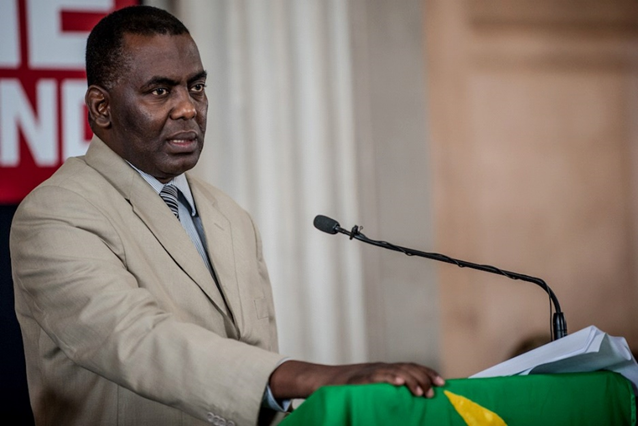
Abeid’s background as a descendant of former slaves has profoundly influenced his activism. Despite the official abolition of slavery in Mauritania in 1981, the practice persists in various forms, leaving descendants of former slaves subjected to exploitation and denied their basic human rights. In response to this, Abeid founded the IRA, an organization dedicated to dismantling the entrenched system of slavery and promoting human rights and equality.
Abeid’s campaign is built on a promise of radical change, aiming to overhaul the current system and establish a government that genuinely serves the people. He has engaged directly with his supporters, listening to their concerns and discussing their problems, which underscores his commitment to a more inclusive and responsive governance.
Biram Dah Abeid, with his extensive background in human rights advocacy and his commitment to social justice, presents a vision of a Mauritania where equality and human rights are paramount
The political landscape in Mauritania has been evolving since 2019, marked by a gradual opening and the first peaceful transfer of power in the country’s history. This shift towards greater political pluralism and accountability is seen as a positive development, although challenges remain, particularly in maintaining checks and balances to prevent the resurgence of authoritarian rule.
In recent legislative elections, President Mohamed Ould Cheikh Ghazouani’s El Insaf party secured a significant majority, while opposition groups, including a new coalition of independent and human rights groups, have also gained representation. The adoption of a proportional representation system has also increased the political participation of minority groups. Despite this advancement, Mauritania still faces considerable challenges, including marginalization of minority groups, inequality, poverty, corruption and the legacy of military coups. The Judiciary and Electoral Commission have been reformed to increase their independence, but their effectiveness remains a crucial factor for the country’s democratic progress.
The President’s party, El Insaf won 107 seats out of the 176 seats contested in the legislative elections held in May 2023. The Islamist Party, Tawassoul, won 11 seats and the Union for Democracy and Progress Party obtained 10 seats. Since the introduction of multiparty politics, the party with a stronger representation at the National Assembly has always had an edge over the others. Currently, most of the political parties, however, appear weak and lack the organizational capacity and resources to marshal campaigns and challenge the ruling party.
The only notable opposition is Biram Dah Abeid. He was the runner up in the 2019 elections. He is often referred to as the ‘Mauritanian Nelson Mandela’ due to his fight and commitment to exterminate slavery. He has massive support from the descendants of slaves, a community to which he belongs. The Tawassoul Islamist might also be hopeful to stake a claim for the presidency due to their hold in the south of the capital, Nouakchott. However, the incumbent President remains the clear favorite to win the 2024 election for his second term in office.
Download full document below:
https://www.state.gov/reports/2022-country-reports-on-human-rights-practices/mauritania
-World Bank. (2022). *Mauritania Overview*. Retrieved from https://www.worldbank.org/en/country/mauritania/overview https://ami.mr/en/archives/17278
https://ami.mr/en/biography-of-the-president-of-the-republic-his-excellency-mohamed-cheik https://ami.mr/en/biography-of-the-president-of-the-republic-his-excellency-mohamed-cheikh-el-ghazouani
“https://ami.mr/en/biography-of-the-president-of-the-republic-his-excellency-mohamed-cheikh-el-ghazouani”h-el-ghazouani
“https://ami.mr/en/biography-of-the-president-of-the-republic-his-excellency-mohamed-cheikh-el-ghazouani”https://www.presidence.mr/fr/node/458
https://www.rfi.fr/fr/afrique/20190619-presidentielle-mauritanie-mohamed-lemine-el-mourtej “https://www.rfi.fr/fr/afrique/20190619-presidentielle-mauritanie-mohamed-lemine-el-mourteji-el-wavi-invite-rfi”
“https://www.rfi.fr/fr/afrique/20190619-presidentielle-mauritanie-mohamed-lemine-el-mourteji-el-wavi-invite-rfi”i-el-wavi-invite-rfi
“https://www.rfi.fr/fr/afrique/20190619-presidentielle-mauritanie-mohamed-lemine-el-mourteji-el-wavi-invite-rfi”https://ami.mr/fr/archives/248278
“https://ami.mr/fr/archives/248368”https://ami.mr/en/archives/17308
-democratie/mouvement-pour-la-renovation-ajd/mr/
“https://www.frontlinedefenders.org/en/profile/biram-dah-abeid” “https://www.politico.eu/article/qatargate-biram-dah-abeid-mauritania-giorgi-panzeri-european-parliament/”https://www.frontlinedefenders.org/en/profile/biram-dah-abeid “https://www.politico.eu/article/qatargate-biram-dah-abeid-mauritania-giorgi-panzeri-european-parliament/”https://nieuws.kuleuven.be/en/content/2019/patronsaintsday-biram-dah-abeid
“https://www.wathi.org/candidat-election-mauritanie-2024/el-id-mohameden-mbarek-candidat-du-parti-front-republicain-pour-lunite-et-la-democratie-frud/”republicain
“https://www.wathi.org/candidat-election-mauritanie-2024/el-id-mohameden-mbarek-candidat-du-parti-front-republicain-pour-lunite-et-la-democratie-frud/”-pour-
“https://www.wathi.org/candidat-election-mauritanie-2024/el-id-mohameden-mbarek-candidat-du-parti-front-republicain-pour-lunite-et-la-democratie-frud/”lunite
https://fr.saharamedias.net/le-candidat-outouma-antoine-souleimane-soumare-preoccupe-par-l HYPERLINK “https://fr.saharamedias.net/le-candidat-outouma-antoine-souleimane-soumare-preoccupe-par-la-situation-de-la-snim/”
“https://fr.saharamedias.net/le-candidat-outouma-antoine-souleimane-soumare-preoccupe-par-la-situation-de-la-snim/”a-situation-de-la-snim/
- Mauritania’s history of political transitions and military coups.
- Studies on Mauritania’s political developments and reforms since 2019.
- Reports from international organizations on Mauritania’s political environment.
- Reports from the World Bank or IMF on Mauritania’s economic conditions.
- Articles on the country’s reliance on extractive industries.
- Analysis from think tanks on economic reforms and corruption in Mauritania.
- Profiles of candidates like Biram Dah Abeid and El Id Mohameden M’Bareck.
- Coverage of the 2024 election campaigns from local and international news outlets.
- Reuters. (2024). “Mauritania’s Presidential Elections: Candidates and Campaigns.” Reuters Africa.
- Statements and manifestos released by the candidates or their parties.:
- Reports by election monitoring bodies such as the African Union or the United Nations.
- Articles analyzing previous elections and predicting potential outcomes for 2024.
- Scholarly articles on voter behavior and election integrity in Mauritania.
- World Bank. (2023). “Mauritania Economic Update.” World Bank Publications.
- International Crisis Group. (2022). “Managing Transition in Mauritania: A Path to Political Stability.” Crisis Group Africa Briefing.


