

By E. K. Harding
5/6/2026
Reports indicate that about 200 South African companies operate in Ghana, ranging from mining, telecommunications, banking & finance and even retail. These dominant firms contribute enormously to South Africa’s economic development and also generate enormous profit for shareholders as the profits are repatriated from the host country, Ghana. While boosting South Africa’s economy to some extent as well as engineering returns for external investors, the operation of the companies alters the socio-economic landscape of Ghana thus negatively affecting the working class, ecology, economy and human capital as a whole.

Suffice to note however that the wealth created by South African companies rewards capital and not workers. The reason being that the wealth repatriated to South Africa then flows out to international fund managers or investors who are mostly from the US and Europe. They are sarcastically the true owners and dominant giants of resources in every African country. Thus, the wealth does not benefit the working class either in South Africa or in Ghana and the situation contributes to causing intra-class struggle.
Stanbic Bank Ghana, for example, is a strategic subsidiary of Standard Bank Group based in South Africa. 99.71% of its shares are held by Stanbic Africa Holdings Limited which is also a wholly owned entity of Standard Bank Group and incorporated in the UK[1]. According to Stanbic Bank Ghana’s reports, when the board declares dividends, 99.71% of the total is distributed to Stanbic Africa Holdings Limited (headquartered in the UK)[2].
MTN Ghana (known as Scancom PLC) has over 72% of its shares held by Investcom Consortium Holdings SA. This shareholder is a wholly owned subsidiary of the parent company known as MTN Group based in South Africa and also listed on the Johannesburg Stock Exchange.[3] Its treasury is situated in South Africa; it is to this parent treasury that the net profits or majority stakes are repatriated. From this upstream, the board pools its global earnings to pay dividends to the stock market investors worldwide[4]. Business Front reports that MTN Ghana and MTN Nigeria reaped 90% of the MTN Group’s profit after tax back to Johannesburg; thus, making the two West African subsidiaries the ultimate lifeblood of the entire MTN Group[5].
Goldfields Ghana operates Tarkwa and Damang mines[6]. With regard to the Tarkwa Mine, Goldfields Limited, which is a South African mining company, has about 71.1% stakes; IAMGOLD which is a Canadian mining company owns 18.9% and the Government of Ghana has a 10% free carried interest in accordance with the provisions of the Minerals and Mining Act, 2006 (Act 703). Goldfields Limited is listed both on the Johannesburg Stock Exchange as well as New York Stock Exchange. In terms of profit distribution, the company operates with a framework known as Capital Allocation. Per this arrangement, cash generated by Tarkwa mines (and other Goldfields’ local mines) flow into a centralized international pool which underscores the company’s object of optimizing Goldfields Limited’s asset growth and share value.
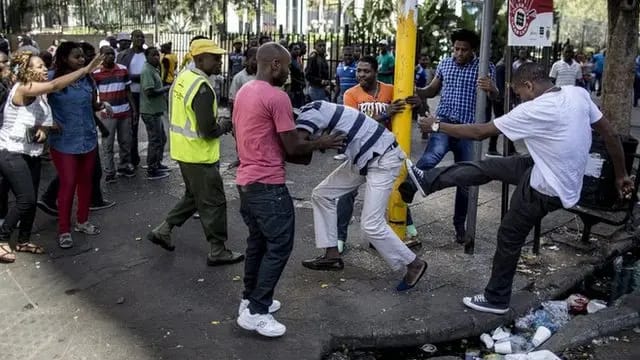
Simply put, the framework for proft for these industries, inter alia, mining, telecommunication, energy, banking, is engineered to drive or maximize returns for investors and owners of capital. Hence, corporate returns or profit prioritizes the financial interests of shareholders and capital markets. Unfortunately, the working class in South Africa does not see the system of corporate globalization or capitalism as the root cause of problem of the systemic inequality in the country. They see foreign nationals as the main threat and misdirect all their grievances towards these poor foreign workers. This adverse structural economic situation has transformed into intra-class struggle and the effect is the xenophobic attacks vented on fellow African working class.
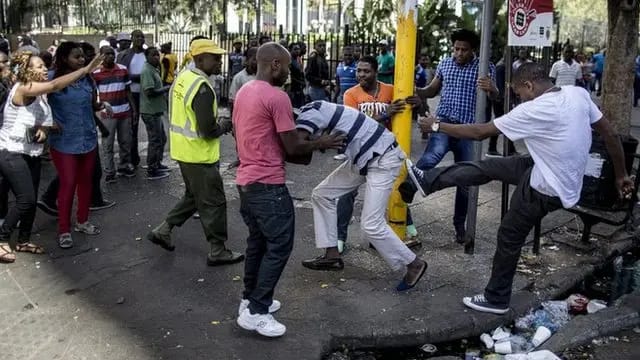
Table 1: Key South African Corporate Entities operating in the Ghanaian Market
| SECTOR / INDUSTRY | COMPANY | BRIEF DESCRIPTION |
| MINING | Goldfields Ghana (Tarkwa, Damang) | Mining giant contributing tremendously to South Africa’s revenue inflows through gold export profits |
| TELECOMMUNICATION & TECH | MTN Group | An absolute behemoth, and by far, the largest corporate entity in Ghana, contributing a great deal of MTN Group’s overall West African revenue. |
| MultiChoice Ghana (DSTV, GOTV) | Which completely dominates the pay-TV market in Ghana; routing subscription revenues back to its headquarters in Johannesburg. | |
| INDUSTRIAL & ENERGY | Engen Petroleum (with its HQ in Cape Town) | A dominant oil and energy company involved in the refining, marketing, and distribution of petroleum products. It operates fuel stations in Ghana and across other African countries. It also supplies fuels, lubricants, and related services. |
| Lancet Laboratories | A leading pathology and diagnostic laboratory groups in the country. | |
| South African Breweries (SAB) Miller | A multinational brewing and beverage company known for producing beers and soft drinks; with brands like Castle Lager and Miller Genuine Draft. | |
| BANKING | Absa Bank | A banking titan with its international headquarters at Johannesburg. Its parent company is Absa Group Limited. |
| First National Bank | A subsidiary of FirstRand Group, expanding heavily into Ghana’s retail and commercial digital banking space. | |
| Stanbic Bank | A premier financial institution in Ghana handling major corporate accounts. It is a member of the Standard Bank Group which is South Africa’s largest financial services institution. | |
| RETAIL | Shoprite | An undisputed king of modern supermarkets in Ghana, anchoring major malls in Accra and Kumasi. |
| PROPERTY & HOSPITALITY | Protea Hotels | Owned by Marriott but managed/originated out of South Africa, anchoring the business hospitality sector in Accra |
| Broll Ghana | A major property management firm handling the real estate of Ghana’s top commercial malls and offices |
The relationship between South African multinationals and Ghana is a classic example of Foreign Direct Investment (FDI) dynamics, creating benefits and economic tension at the same time:
1. The Benefit to South Africa in terms of Capital Inflow
These multinationals remain South Africa’s economic engines as they repatriate a vast amount of profit back to the country. The dividends and profits sent back home bolster the country’s current account balance, fund corporate research and development, and reward South African investors.
Thus, the repatriated profits flow directly into South Africa’s financial system, boosting the balance sheets of parent companies, increasing national savings, and raising stock values on the Johannesburg Stock Exchange (JSE).
Again, the imported surplus value allows South African multinationals to reinvest in local infrastructure, fund domestic development, and pay dividends to South African shareholders and pension funds.
Moreso, retailers like Shoprite act as pipelines for South African manufactured goods and agricultural products. By stocking these items on Ghanaian shelves, they stimulate demand back home, while boosting and sustaining manufacturing as well as agriculture within South Africa.
It is therefore safe to arrive at no other conclusion than the fact that South African multinationals with operations in Ghana contribute enormously to their country’s economic growth and development.
2. Impact on Ghana in terms of Local Balance
People may argue that the companies create thousands of local jobs, generate corporate taxes, and perhaps upgrade infrastructure for Ghana. It must however be noted that the sheer volume of profit repatriation creates a macroeconomic challenge for Ghana; especially, in terms of currency depreciation.
When companies like MTN, Stanbic, or Shoprite, among other multinationals, convert billions of Ghanaian Cedis into US Dollars or South African Rand to send profits home, it puts immense downward pressure on the Cedi.
3. Impact on the Ghanaian Working Class
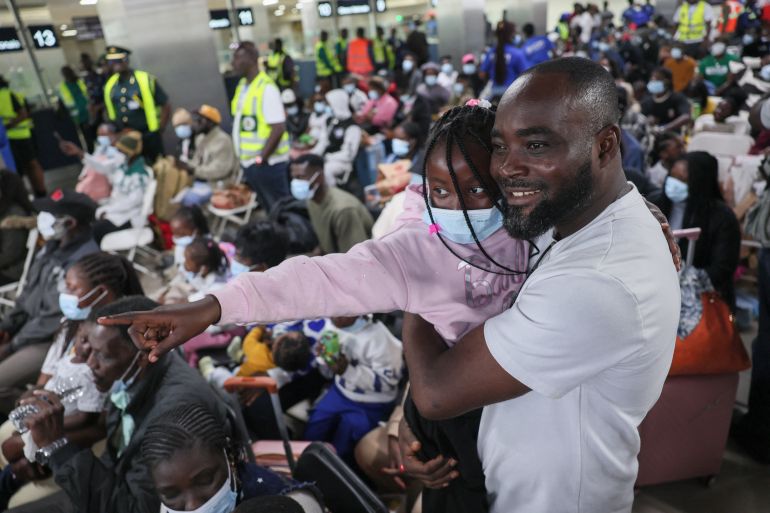
It is working class Ghanaians who are being tortured and chased out of South Africa. On the flip side, the presence of South African multinationals in Ghana represents the expansion of transnational monopoly capital into a peripheral economy; in terms of extraction of surplus value, division of labour, subjugation of the working people.
The wealth generated by the aforementioned South African multinationals is created largely by Ghanaian labour. In Ghana, local workers (miners at AngloGold, cashiers and attendants at Shoprite, or engineers at MTN etc.) sell their labour-power to these multinational corporations. The gross or net profit made by the companies represents the surplus value created by Ghanaian workers that is held by the owners of capital rather than the labourers who generated it. These owners of the capital are international and South African bourgeois.
The working class in Ghana is relegated to providing relatively cheap labour and consuming of foreign commodities. Meanwhile, the high-value intellectual property, corporate management strategies, and ultimate financial rewards remain concentrated in the core metropole of South Africa.
Under this framework, dominant foreign firms (South African multinationals) stifle the growth of a native, independent Ghanaian manufacturing or retail class. For example, local businesses cannot compete with the massive economies of scale possessed by giants like Shoprite or MTN; this plunges the local population into a state of permanent wage-dependency on foreign capital.
4. The negative effect of repatriation of profit from Ghana to South Africa
In actual fact, Ghana’s investment laws are intentionally designed to guarantee the repatriation of profit so as to attract foreign direct investment (FDI). Under the Ghana Investment Promotion Centre (GIPC) Act, 2013 (Act 865), foreign investors are explicitly guaranteed unconditional transferability of dividends, net profits, and capital in freely convertible currency.
However, from a political economy perspective, this creates a major systemic drain. For example, as earlier sated, after paying local corporate taxes, entities like the mining companies, banks and communication service providers convert their local currency earnings into foreign exchange through the banking system to send back to their parent groups.
These legal frameworks constitute structural mechanisms that legitimize capital flight. Unfortunately for the host country, it prevents the host country from retaining the wealth necessary for self-sustaining industrial accumulation.
Apart from that the impact unleashed unto the host country from the extractive sectors like mining (AngloGold Ashanti, Gold Fields) is literal depletion. Non-renewable sovereign wealth such as gold is removed from Ghanaian soil. While Ghana receives royalties and corporate taxes, the lion’s share of the material wealth is converted into international capital held abroad. Furthermore, the ecological costs such as land degradation and water pollution are entirely localized, leaving Ghana as host country to bear the environmental debt long after the finite resources are exhausted.
Moreso, the effect on human capital of the host country is paradoxical. On one hand, South Africa’s companies like MTN, Absa, and Goldfields provide high-quality corporate training, technological skills, and employment. On the flip side, the best and brightest Ghanaian minds are effectively absorbed into serving the profit motives of foreign capital rather than developing indigenous solutions for national development. Because strategic, high-level corporate decisions are made in South Africa, a structural glass ceiling often exists for local talent, limiting true sovereign economic self-determination.
5. The root cause of the intra-class struggle between the South African and Ghanaian Working Class
As indicated earlier, so much wealth is generated by South African companies in Ghana. Unfortunately, the wealth is reinvested in the developed nations like Europe and the US.
To be blunt, the primary beneficiaries of repatriated wealth to the home country are the investors and shareholders of those companies. Once profit is sent back to South Africa, it goes directly to the corporate treasury of the companies for the benefit of the owners of the capital. In this regard, dividends are paid to the shareholders of the company. Also, part of the funds is used to purchase the company’s own stock so as to augment the value of the remaining shares. Moreso, the company reinvests part of the profit to expand into new markets with the object of generating more profit for the investors.
It is worthy of note that, whereas those companies are classified South African, their institutional investors mostly comprise global fund managers from the US, UK, Japan and Europe. Thus, the greater slice of the wealth repatriated to South Africa often flows right out again to those international financial centers. Hence, the wealth does not remain in the domestic economy of South Africa to be used for the development. Worseso, the working class does not get any direct benefit from such wealth. Again, if for example a South African bank, telco, or mining company makes huge corporate profit from Ghana, that does not suggest that that profit will reflect automatically in higher wages of frontline workforce of the parent company in South Africa. Those companies may even lay off workers in the South African branches to reduce costs since they make higher profit in Ghana.
In short, wealth created by South African companies in Ghana are not intended for the benefit of the working class. The system of corporate globalisation or capitalism is to the effect that the wealth rewards capital, in other words investors; and not labour. Therefore, for the working class in Ghana, the benefit is limited to local employment and immediate economic activity. For the working class in South Africa, the benefit is almost invisible; it is subsumed in the country’s tax pool.
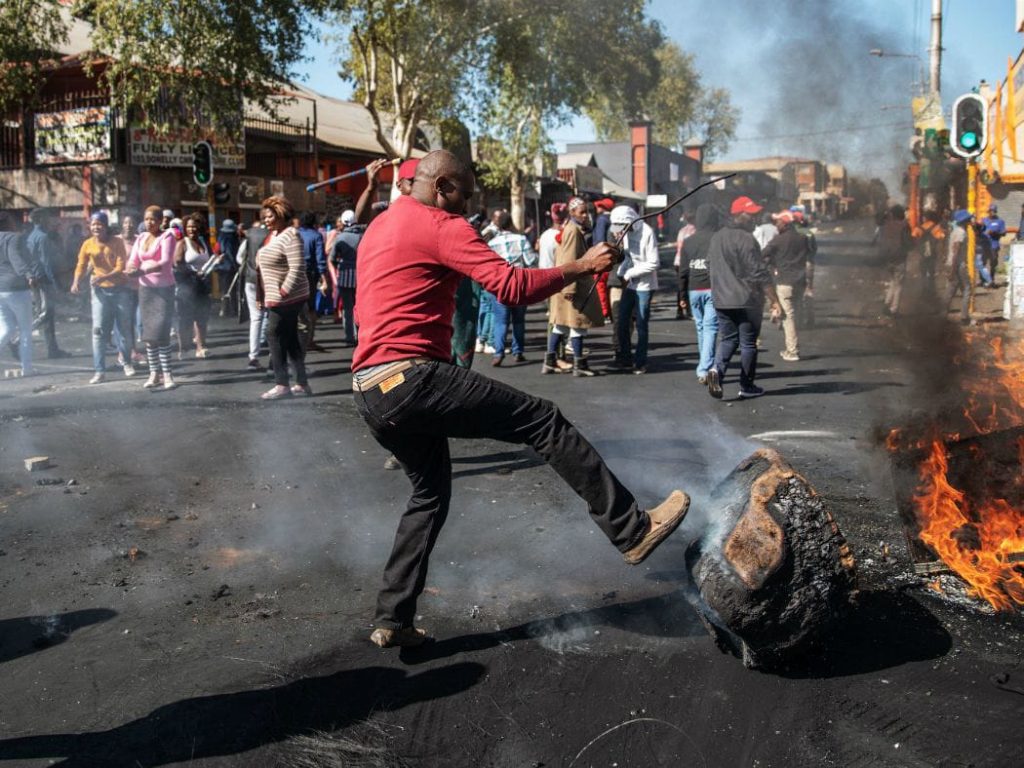
Unfortunately, the ordinary South African does not seem to see the system of capitalism or the government as the problem. They consistently perceive their fellow working class foreigners as the problem. This debilitates intra-class struggles, perpetuating the xenophobic attacks being witnessed every year.
Conclusion
Appadurai argued that the modern world has outgrown the rigid borders drawn on maps. It is one of the realities of globalization; as people, finance, technology and ideas are in constant motion. Dr. Kwame Nkrumah who foresaw this precise reality passionately called for Africa’s true development as dependent entirely on continental unity. By implication, the continent cannot thrive as isolated islands.
Naturally, human beings have always being on the move. Whether it is a South African tech professional in Accra, a Ghanaian entrepreneur in Lusaka, or a Nigerian executive in Nairobi, people cross borders for the same deeply human reasons which include to build businesses, find better livelihoods, enjoy leisure, or simply seek safety from conflict. Alongside these moving people are the rapid, cross-border flows of technology, capital, media, culture and political ideologies. This mutual exchange is a two-way effect as it impacts the economies of both the home and host nations.
Therefore, trying to purge a nation of everything or everyone “foreign” is a self-defeating illusion. This is because, it creates a situation where states are compelled to deal with the devastating domino effect; for instance, if South Africa pushes out Ghanaian migrants, what happens when Ghana is forced to halt the operations of South African businesses in Accra? Who wins a war of mutual exclusion?
This is a clarion appeal to the people of South Africa and all African nations to demand real accountability from their leadership and the owners of capital. Xenophobic blame games only mask the deeper structural failures faced by the citizens, including rising unemployment, porous and poorly managed immigration systems, high crime rates, and severe economic strain.
It is time South Africa’s leadership looked inward. Instead of spending vital national resources playing geopolitical games on the global stage, the presidency must sit down and directly confront the domestic economic crises making the people feel vulnerable. Blaming neighbours will never fix a nation’s economy.
[1] https://www.stanbicbank.com.gh/static_file/Ghana/Downloadable%20Files/Financials/2024/2024%20Annual%20Report.pdf)
[2] https://www.stanbicbank.com.gh/static_file/Ghana/Downloadable%20Files/Financials/2024/2024%20Annual%20Report.pdf)
[3] https://mtn.com.gh; https://www.graphic.com.gh
[6] At the time of writing, the lease for Damang mine had expired (in April 2026); while the Government of Ghana and local operators had taken full control, there were still negotiations between Goldfields and the government for renewal of the lease.
