

WEST AFRICA CONJUNCTURE: Country Study Series, Ghana Elections 2024 – Tickets & Messaging
STUDY REPORT No.14 / November 5, 2024
Abstract
There is no doubt that with some 40 days to the general election, the current political, social and economic situations continue to tense up; with several street protests, labour-induced strikes, or notifications of strike, and increased abuse of citizens’ civil rights by the security forces. The ensuing flux and veiled thrust of post-election violence have presented ordinary Ghanaians with difficult choices regarding the impending presidential and parliamentary elections. These certainly are neither stable nor peaceful times and some moderation would be required.
Recent Afrobarometer surveys and opinion polls released between June and September 2024 revealed that a fifth (20%) of the voting population would prefer an alternative to the current bourgeois neo-colonialist democracy. Eighty-seven per cent (87%) of those surveyed are dissatisfied with electoral democratic governance and said the economy is moving in the wrong direction. This rather pessimistic survey outcome as expressed by the citizenry is not surprising, given the existing bourgeois political ethos, that has not offered the citizenry much in terms of economic development, regarding what was promised them and, thus, genuinely expected socio-political dividends, vis-à-vis what has been delivered, over the last couple of years.
Besides the huge disconnect between perception and reality, which has left a bankrupt economy with a national debt overhang of GHȼ742.0 billion, citizens also have become cynical about any prospects of national recovery and sustainable reconstruction. This is understandable, given that the ruling NPP Government of President Akufo-Addo is unable to service the incurred national debts, especially as interest payments fall due, and has resorted to postponement into the near future, beginning only in 2025. Additionally, there are current expenditure accruals which are not factored as part of the national debt and which persistently lock Ghanaians into an unsustainable debt trap. The truth of the matter is that, as a country, Ghana has been reduced to a status of habitual loan defaulter by the current NPP government, thereby compromising our national pride, sovereignty and enveloping us in dire credibility issues.
The national economy, as a whole, is gone adrift, currently on auto pilot, and caught within dangerous head winds spin. Our executive President is hardly in town and his vice, who is also the head of the economic management team (EMT) is all over town and country campaigning to be elected as substantive President on the ticket of the NPP. Though there have been some reported improvements in monetary policy management resulting in increases in the quarterly rates of growth, these are not translated into visible quantitative development, because they are not led by sectors controlled by Ghanaians; particularly, in the crude oil, gold and such others in the extractive industry. The resultant effect is the prevailing economic quagmire, with its obvious hardships facing majority of Ghanaians, in an ever-rising inflationary environment.
On top of all these, is the existence and prominence of a culture of impudence and arrogance as propagated by the NPP government in its “do nothing” policy stance, regarding the existential threat of illegal gold mining, or ‘galamsey’. The government’s current stance is unnerving and therefore creating distrust and suspicion of its real intents, policies and programmes, in the event its political power is renewed.
Other likely issues to be leveraged by the voting public in making their respective choices will centre on those of accountability and transparency. The main question which is expected to linger on their respective minds is how the public authority given in 2016 and 2020 has been effectively used in the last seven years to fairly, impartially and transparently produce public and other social goods to ameliorate the basic issues of material life and living (i.e., food, shelter, clothing, jobs, health, education and transportation) over the period of NPP government’s tenure. The issue of looting[1] and protection of the public purse by politicians and politically exposed persons will also occupy the centrestage in determining the eventual choice in December, 2024.
Introduction
It is reasonable to assume that the primary objective of every political party is to work tirelessly to gain power and form a government that implements practical policies and programmes to improve the lives of citizens. This implies that a political party must have a clear sense of purpose, mission and direction, in order to be taken seriously in its quest for power. In essence, a political party should be guided by a philosophy or a set of core ideas and values that inform its decision making and policy implementation. This philosophy serves as a foundation for the party’s political mandate, ensuring that its actions align with its principles and goals.
In Ghana, the two dominant political parties, as well as the other political formations competing for power have various shades of ideological leanings, ranging from neoliberalism to pseudo-socialism. The two major political parties – New Patriotic Party (NPP) and the National Democratic Congress (NDC) – have distinct ideological leanings. The NPP adheres to neoliberal conservatism, while the NDC identifies as social democrats.
However, the fundamental question remains: which party (NPP/NDC) has demonstrated greater competence in executing its mandate and translating its ideology into tangible outputs and concrete outcomes for the citizens of Ghana, particularly over the last 32 years of multi-party democracy under the 1992 Republican Constitution?
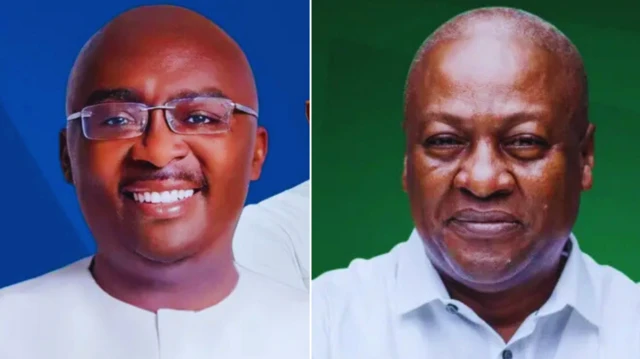
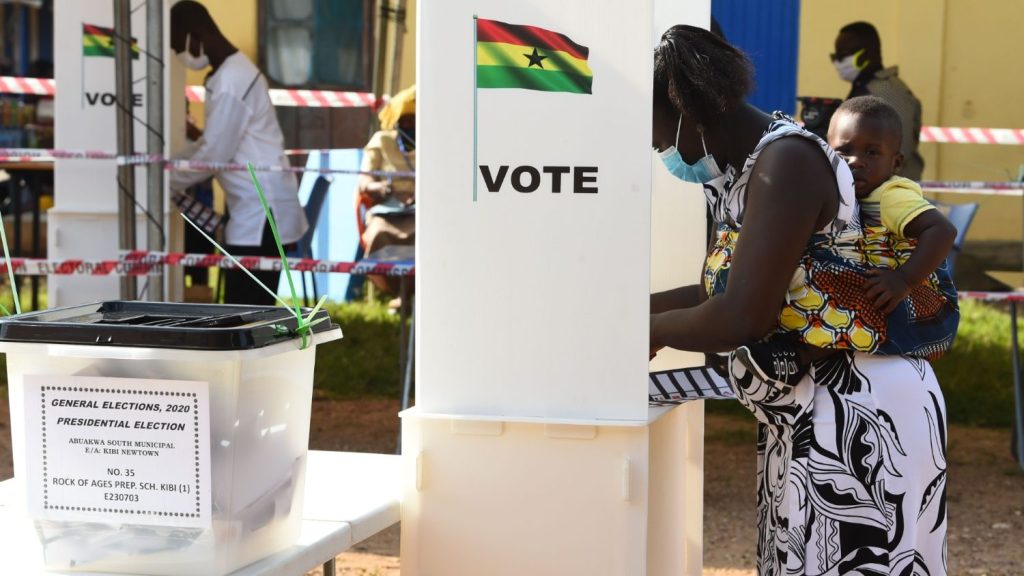
On Saturday, 7 December 2024, Ghana holds its general elections to elect the President and Members of Parliament. As usual, several political parties and independent candidates have readied themselves to partake in the upcoming elections. The NDC‘s presidential candidate, John Dramani Mahama, a former president (2012-2017), has demonstrated his democratic credentials by graciously accepting defeat in 2016 and 2020 and ensuring a smooth transition on both occasions. On the other hand, the NPP‘s standard-bearer, Vice President Dr. Mahamudu Bawumia, an Economist, positions himself as a bridge-builder across Ghana’s diverse electorate. Other presidential candidates include John Alan Kodwo Kyerematen, the former trade and industry minister under the incumbent NPP regime, and Nana Kwame Bediako, a real estate magnate.
Given the tightness of the last elections, held in December, 2020, and parliamentary parity, resulting in the first-ever Ghanaian Hung Parliament, the forthcoming general election is expected to be highly competitive, despite concerns over the electoral process and the increasing doubts over the fairness of public institutions, particularly, the judiciary and the security services.
The Tickets
Expectations of the Electorate
Given the gravity of the prevailing economic situation, the Ghanaian voter electorate expects the various tickets to be announced by the different political parties and movements to have the grit to lead and create a new future of confidence in which the material conditions of the Ghanaian people take centrestage. The Ghanaian voter actually expects the ticket to outline the mechanics of building an independent self-reliant national economy where the resources of this country belong to the people of Ghana and are used solely for their benefits. In other words, the voter expects the reconstruction of a society that ensures three square nutritious meals to every Ghanaian within a society in which no Ghanaian goes to bed on an empty and hungry stomach. In addition, the ticket must have the leadership capacity to inspire a new social consciousness and values within fellow countrymen imbued not only by nationalism but also patriotism to take the bull by the horns; to undertake autonomous social and economic reconstruction with less reliance on foreign loans and portfolio investments to finance from within the national economy.
Furthermore, the electorate is looking forward to a ticket which is not desultory, non-cavalier, and not sweet-tongued, but able to lead from the back with all honesty, humility and accountability; yet very enterprising. The ticket should also be well-steeled in international diplomacy, suave, and able to stand up to all kinds of interference from forces of reaction, while protecting and upholding national sovereignty, and non-alignment, within the framework of multilateralism. Furthermore, the ticket should have the capacity to build strong governance and accountable institutions within reviewed constitutionalism. The voter demands higher accountability from all those who want to lead and manage and expects the ticket to reflect that.
The Two Main Candidates
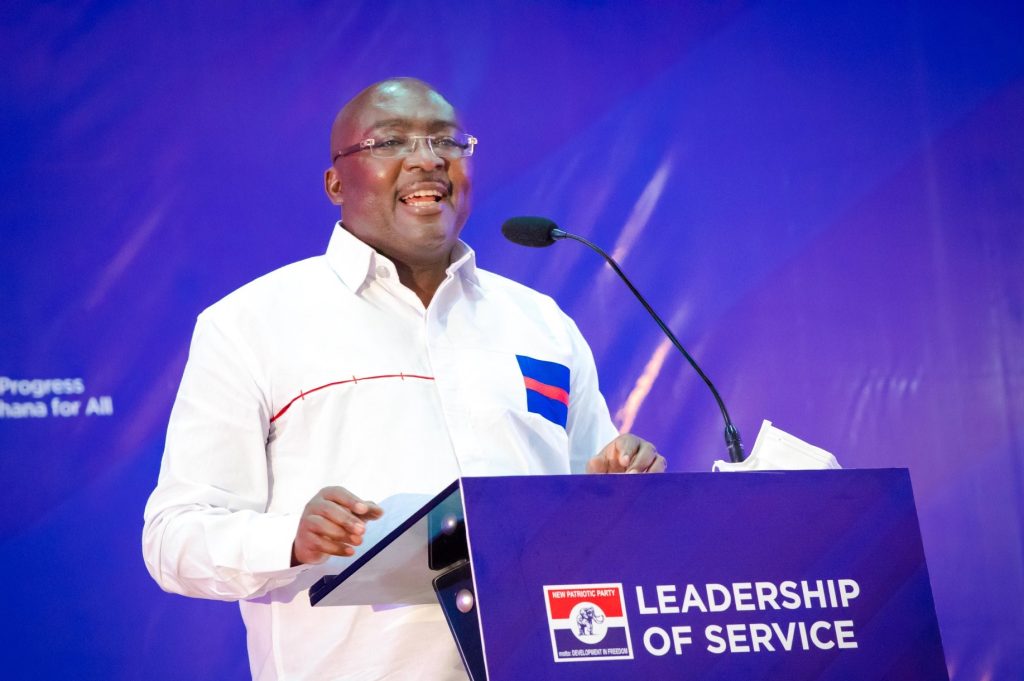
NEW PATRIOTIC PARTY – DR. MAHAMUDU BAWUMIA WITH DR. MATTHEW OPOKU PREMPEH
The presidential candidate of the NPP, Vice-President Mahamudu Bawumia, has selected the current Energy Minister – Matthew Opoku Prempeh; MP – as his running mate. This comes as President Nana Akufo-Addo prepares to step down in January, 2025, having completed the constitutionally allowed two terms. Vice-President Bawumia’s selection of Matthew Opoku Prempeh as his running mate appears to reverse a long-standing NPP tradition where the vice-presidential candidates are appointed from diverse religious and non-Akan ethnic backgrounds, to broaden the appeal of the ticket[2]. This strategic choice sets the stage for a competitive presidential election between Bawumia, the NPP candidate, and former President John Dramani Mahama, who seeks to reclaim the presidency.
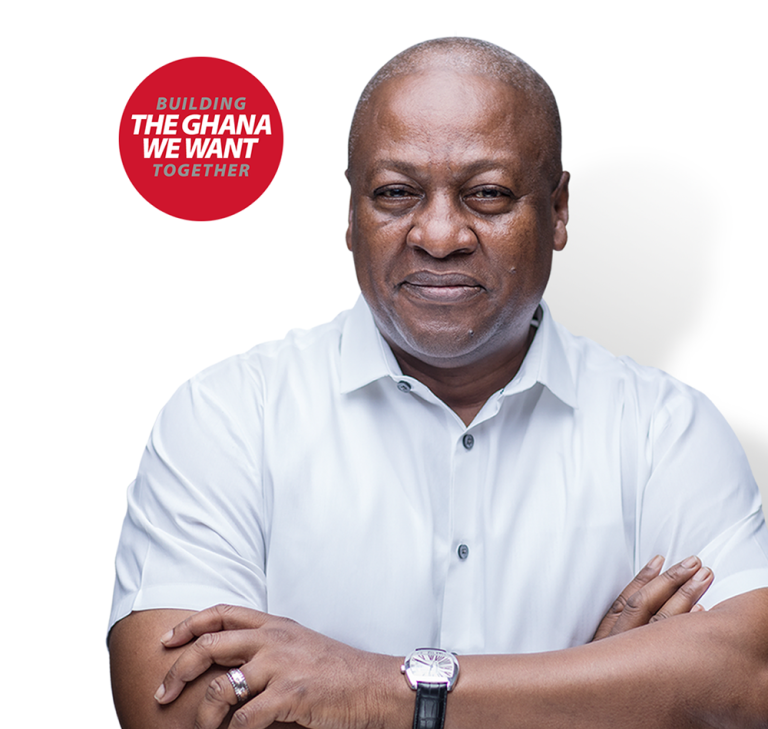
NATIONAL DEMOCRATIC CONGRESS – JOHN DRAMANI MAHAMA WITH NAANA JANE OPOKU-AGYEMANG
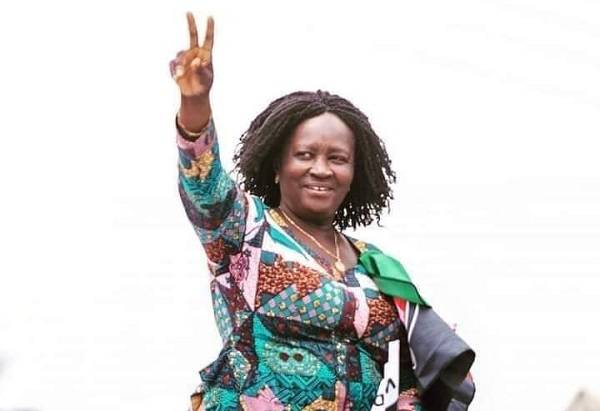
The flagbearer of Ghana’s main opposition party – former President, John Mahama – has chosen Professor Naana Jane Opoku-Agyemang as his running mate for the 2024 presidential elections. It is the third time John Mahama will run for Presidency and about Naana Jane Opoku-Agyemang this marks her second time in the vice-presidential role after previously supporting Mahama in the 2020 election. Opoku-Agyemang’s selection is seen as a strategic move to garner votes from women supporters, who represent some 51 per cent of the electorate; as well as gain additional support in the Central Region, where she hails from. If successful, she would become Ghana’s first female vice-president; thereby, breaking new ground for women in politics. With her vast knowledge and background in education, and experience as a former minister in charge of education, Professor Opoku-Agyemang brings a strong skill set to the ticket, and her commitment to empowering women and girls would resonate with voters.
Evaluation of the Tickets
ALHAJI DR. MAHAMUDU BAWUMIA WITH DR. MATTHEW OPOKU PREMPEH (alias NAPO)
Vice-President Bawumia, and presidential candidate of the NPP, is generally seen by most Ghanaians, outside the New Patriotic Party, as a stooge, a bare-faced liar who is economical with the truth. He is also regarded as a man who is not an honest broker, and a lynchpin for the plunderers of the State’s assets. Though he has tried in the last six months to distance himself from his protégé President Nana Addo Dankwa Akufo Addo, this perception remains and continues to hurt his campaign.
The greatest asset of this presidential candidate, Dr. Mahamudu Bawumia, is his alleged economic prowess and economic oratory. He is seen in the NPP grassroot supporters as the best placed candidate to break the eight-year governance cycle, sustain the Danquah-Busia-Dombo tradition and to continue with the Akufo Addo policies. Dr. Mahamudu Bawumia holds a bachelor’s degree in economics from the University of Buckingham, UK, a master’s degree in development economics from Oxford University and a PhD in Economics from Simon Fraser University in Canada. He is an economist and a banker. Between 2006 and 2009, he served as Deputy Governor of the Central Bank of Ghana. Subsequently, Dr. Bawumia served for a year as a visiting scholar at the Center for the Study of African Economies, Oxford University. He has also taught Economics in several universities, including Central University in Ghana and Hankamer School of Business in the United States. With his extensive knowledge in Economics, Dr. Bawumia has authored numerous articles and written two books on Monetary Policy and Economic Development.
Candidate Bawumia’s liabilities include presiding over a poorly managed economy, from 2017 to date; despite the fact Ghana posted impressive economic growth and development, in the years prior to 2017. Some of the contributory factors during his tenure as chairman of the Economic Management Team (EMT) included persistent fiscal and budget deficits, Government’s excessive domestic and external borrowing for present consumption, high depreciation of the Ghanaian Cedi, low domestic production in the real sectors of the economy and running inflation. Other liabilities are the pointless digitalization agenda, involving digitization of key sectors of the economy which saw the introduction of a biometrically enabled identity cards, tracking revenues electronically and digitizing access to services. Though the major reasons were to ensure transparency in public services and to curb bribery and corruption, the agenda was not effective largely because people still have to pay bribes to access public services, like passports, driving licenses, or pay extra to clear goods from the ports. Meanwhile, companies evade taxes, while ordinary citizens are burdened with e-levies, COVID-19 taxes, and other onerous taxes! For the first time in the history of the Fourth Republic, Ghana has been ranked 43, out of 100, at The Corruption Perceptions Index (CPI) released by Transparency International.
The running mate, Dr Matthew Opoku Prempeh, has not fared any better. To many Ghanaians, his candidacy came as a depiction of callousness, insensitivity and selfishness on the part of the ruling Akufo-Addo’s administration. Hence, he is openly seen as a mannequin or dummy, to appease the party’s Ashanti stronghold. One main reason being the fact that his handling[3] of policy matters, as sector Minister, at the Ministries of Education and Energy, portrayed him as rude, mean, crooked and selfish broker on the national stage. He is also seen as a loose cannon, especially as exhibited at his inaugural and post-inaugural platform speeches, which caused grave discomfiture to certain segments of the NPP fraternity and irked anger amongst the larger Ghanaian citizenry with his unprovoked and unguarded attack on Kwame Nkrumah, the first President and founder of the Ghanaian State[4].
NAPO is not only perceived as insensitive and arrogant, but also ethnocentric and tribalistic. When he took over office as Minister of Education, Dr. Opoku Prempeh is alleged to have sacked almost all top managers who hailed from the Volta Region, claiming they were NDC supporters. His neglect of victims of the Volta Dam spillage goes on to emphasize the former Energy Minister’s perceived tribalistic attitude. During those dreadful moments for over 36,000 victims of the flood, there were calls for the government to make budgetary allocation to cater for tidal waves in the Volta Region. As usual, NAPO dismissed the calls, claiming his constituents had experienced similar ordeals, yet no intervention was rolled out for them. In plain words, NAPO fumed that: ‘How can you the opposition tell me that I should include funding for construction of Keta Sea defence in the budget? Was there budgetary allocation for Kumasi flooding? If Finance Minister includes it, I’ll also lead the Kumasi residents to demonstrate’.
Dr. Matthew Opoku Prempeh had his secondary education at Prempeh College. He proceeded to Kwame Nkrumah University of Science and Technology where he obtained his Bachelor of Science (BSc) degree in Human Biology. He then furthered his studies in Medicine and Surgery at the University of Ghana Medical School.
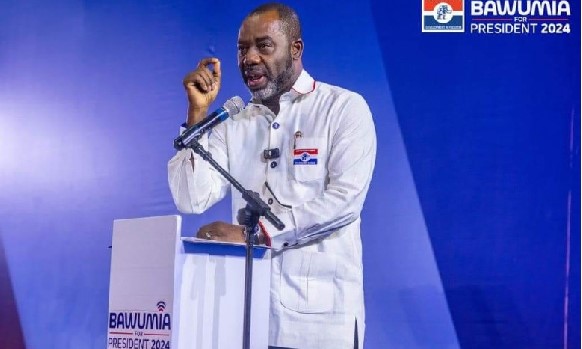
On the whole, the NPP ticket is perceived as normally flaying its political opponents for referring to the party as enablers of corruption through cliques, cabals, collusion of several actors and players in both the civil and public services. This is understandable, in that while Kwame Nkrumah and the CPP built and left assets, Nana Addo Dankwa Akufo-Addo is leaving Ghanaians with liabilities and crippling debts. The ticket is considered by most Ghanaians as treacherous to the overall unity of the country.
JOHN DRAMANI MAHAMA WITH NAANA JANE OPOKU-AGYEMANG
John Dramani Mahama is seen by his party colleagues and non-party members as having acumen of foresight. He is believed to be fair-minded, affable and an abstemious person. His tenure and record at the presidency, vice-presidency and as minister at the communication and information ministries further underlined his capability and capacity to offer inconvertible honest leadership, besides executing the sterling job as President of the Republic. He is a strategist, with excellent and measured communication skills, and affectionately called the “nation builder”, by his admirers.
Candidate MAHAMA is often regarded as a people-oriented leader, with a calm disposition and approachable demeanour, visionary and foresighted. He is known to be practical and a person whose charisma, deftness and intellectual acuity cannot be overemphasized. He is a seasoned communicator who always intrigues his audiences with a great sense of humour. Born on Saturday, November 29, 1958, in Damongo, Northern (Savannah) Ghana, he rose through the ranks to become Vice President in 2009. He was born into a family deeply rooted in politics. His father, Emmanuel Adama Mahama, was a dedicated public servant who held various positions, including Member of Parliament and regional commissioner under Ghana’s first president, Kwame Nkrumah. This exposure likely sparked Mahama’s interest in politics from a young age. Following the sudden passing of President John Evans Atta Mills in July, 2012, Mahama assumed the presidency, for which he later contested in the December, 2012 election, won, and to serve a full term until 2017.
During his tenure, Mahama prioritized social and economic projects, focusing on road and housing infrastructure, universal basic education, and healthcare. Some of his notable accomplishments in these sectors include, significant improvements in basic school infrastructure, equitable access to good quality and child-friendly basic education environment, provision of teaching and learning materials, as well as enhanced management and supervision of schools. His focus in the health care programmes included the provisions of modern hospitals, upgrading of district and rural health care facilities and the launch of “ONUADOR”, a national Medical Outreach Programme which involves the deployment of mobile medical vans to provide various medical services to underserved communities.
Candidate Mahama also invested heavily in the area of housing, in a bid to bridge the housing deficit. Examples of these housing schemes are; “Nyame dua” Estates, Keta Sea Defence Settlement Housing Scheme, and Adenta Regeneration Projects, the Saglemi Affordable Housing Project, amongst others. Other achievements include completion and commissioning of the Atuabo Gas Plant and investments in renewable energies, such as the African Plantation Limited Project. He also made numerous contributions in the communications sector as well, championing the development of the National Data Centre, Business Process Outsourcing (BPO) canter, Eastern corridor Fiber Optic Line, and the eTransform Ghana Project.
Despite the heavy focus on infrastructural development during his presidency, candidate John Mahama’s administration came under severe criticism, especially, during his last few years in office. This was occasioned by economic downturn, rising inflation, and persistent electric power outages, commonly referred to as “Dumsor”. It would be recalled that the latter negatively impacted private businesses and individual livelihoods, generally exacting enormous economic losses on Ghanaians of all walks of life.
Professor Nana Jane Opoku-Agyemang, on the other hand, is an accomplished academic and intellectual in her own right. She is a highly experienced and competent individual having managed the University of Cape Coast as Vice Chancellor and served at the education ministry as a cabinet minister. She is fair-minded and serves as role model and mentor to the women of this country. She is an illustrious woman of substance, with immense integrity, resourcefulness and an achiever. She is also a known team player, efficient and capable. Her stoic commitment to building a prosperous Ghana and unquestionable dedication to excellence and service are unparallel. With her profound knowledge, coupled with hands-on experience, as well as her being a prime mover of novel ideas on social development and progress, Ghana can look forward to a period of social progress.
Her many international accolades include, among others, her 2007 presentation at the United Nations Headquarters in New York, during the commemoration of the 200th Anniversary of the Abolition of Slavery and serving as Ghana’s representative on the Executive Board of UNESCO in 2009.
Messaging And Analysis of Manifestoes
As is normally the case, election campaign season does give room for aspirants to promise and even overpromise beyond what they can deliver within resource constrained environment. The present season is no exception. Noting, however, that governance is about setting priorities and addressing them within the resources at the disposal of any government. This section presents the optics, contents and assessment of the messages of the frontrunners or leading Participants in the December, 2024 Presidential elections. A total of eight [8] thematic areas have been selected for our analysis, that follows presently, namely: [1] THE ECONOMY; [2] HEALTH AND EDUCATION; [3] AGRICULTURE AND INDUSTRIALIZATION; [4] ENERGY; [5] GENDER AND SOCIAL PROTECTION; [6] SPORTS AND CREATIVE ARTS; [7] THE ENVIRONMENT AND SMALL-SCALE MINING; and [8] GOVERNANCE AND MEDIA.
The National Democratic Congress (NDC)
So far, the optics and content of the NDC messages on ‘24-hour economy’, ‘MahamaCare’, ‘Women Development Bank’ and ‘Corruption’ appeared to have resonated more with the voting public; especially, the youth constituency of the electorate. With regard to corruption, it is worth mentioning that between 2012 and 2016, the NDC took a number of remedial actions during the presidency of John Dramani Mahama. This is beside the fact that the bulk of current messages contained in the party’s manifesto revealed nothing on preferential actions to be taken once power is won. An example is legislating publication of assets, and other personal details, duly declared by public officers and politically exposed persons.
The New Patriotic Party (NPP)
As the campaigns heat up, infirmities of the NPP ticket, platform and messages have become visibly recognizable as bland, outrageous and lacking the ability to be implemented. Unfortunately for candidate Dr. Bawumia, he has earned the unenviable name of being a ‘liar’ and perpetrator of falsehood because he failed woefully to deliver on his promises during his eight-year vice-presidentship. Aside, the NPP base appearing seemingly fractured and fragmented, the optics and contents of platform messages relating to the ‘digitalisation policy’ have not resonated with the voting public. The platforms are further seen to be repetition of the 2016 and 2020 manifestoes which remained unimplemented. The electorate also has accused the ticket of engaging in identity politics, and chicanery.
Analysis Of Four [4] Manifestoes
The schedule that follows contains snippets from the Manifestoes of four (4) of the political entities partaking in the December 2024 Presidential elections. These are: (i) National Democratic Congress (NDC); (ii) New Patriotic Party (NPP); (iii) Movement for Change (MFC); and (iv) The New Force (TNF). While the first two (NDC and NPP) are among the foremost political parties that have been in the forefront of Ghanaian party politics, since the inception of Ghana’s fourth attempt at constitutional governance in 1992; the latter two (MFC and TNF) are recent political formations billed to contest in Ghanaian elections, for the very first time, during the forthcoming December polls. This, in essence, explains why the MFC and TNF either do not feature much, or at all (blank), under a number of the eight [8] thematic areas presented below:
| NATIONAL DEMOCRATIC CONGRESS (NDC) | NEW PATRIOTIC PARTY (NPP) | MOVEMENT FOR CHANGE (MFC) | THE NEW FORCE (TNF) |
| [1] ON THE ECONOMY | |||
| The NDC will, within the first 100 days in office, eliminate several nuisance taxes and levies (such as E-levy, COVID-19 levy, and the 10% levy on bet winnings). | The NPP commits to achieving sustained growth by promoting agribusiness, 1D1F (One District, One Factory), mining, and digital services. | The MFC plans to focus on building an Enterprise Economy that prioritizes innovation, entrepreneurship, and private sector growth. | The TNF intends to mobilize the global African diaspora to invest in Ghana by offering them citizenship in exchange for financial contributions. |
| The party will also reduce import duties on vehicles and equipment used in industrial and agricultural sectors in addition to lowering the cost of doing business while encouraging investment in key sectors. | The party will employ the instrument of increasing Public Private Partnerships (PPPs) to finance and enhance infrastructural projects. In addition, it will leverage green financing for development. | The MFC will lay emphasis on job creation through industrial transformation (such as vehicle assembly and pharmaceuticals) while diversifying away from the dependency on cocoa. | The above strategy is to generate USD 50 billion in investments, contributing to Ghana’s economic growth and fostering pan-African collaboration. |
| The NDC will further stabilizes the national currency, employing measures such as building external reserves, strengthening public debt management, and attracting foreign investment. | The party will undertake wide-ranging tax reforms, including a onetime tax amnesty for individuals and businesses, introducing a flat rate tax system, reducing withholding tax on small-scale gold exports. | Regarding tax reforms, the MFC’s plan includes many attractive short-term reforms, such as lowering taxes, boosting local production, and capping government debt. | The TNF proposes to implement a novel taxation policy where multinational corporations would pay a portion of their taxes in raw materials. This would give Ghana leverage over its natural resources, ensuring the country benefits from its vast mineral wealth. |
| The manifesto seeks to restore investor confidence is a priority, with policies designed to make Ghana attract both local and foreign investors. | The NPP intends to build a world-class digital economy by training 1 million youth in digital skills such as artificial intelligence, robotics, and data analytics. | At the core of MFC’s plan is the transition from a resource-based economy to an enterprise-driven one. | Central to the New Force Movement’s vision is creation of 8 million jobs over the next decade through industrializing key sectors like agriculture, mining, and energy. |
| NATIONAL DEMOCRATIC CONGRESS (NDC) | NEW PATRIOTIC PARTY (NPP) | MOVEMENT FOR CHANGE (MFC) | THE NEW FORCE (TNF) |
| [1] ON THE ECONOMY . . . (Cont’d.) | |||
| One of the NDC’s manifesto’s flagship policies is the creation of a 24hour economy in a concerted effort totransform Ghana into an export-led economy. | A future NPP government will establish a National Robotics, Engineering, and AI Lab to support local innovation, research, and provide venture funding for tech start-ups. | To stabilize the economy and reduce external dependency, TNF will build up mineral, oil, and agricultural reserves. | |
| The NDC will create a special “Women’s Development Bank” toprovide low-interest loans and financial services to at least one million Ghanaian women owned and women led businesses. | The NPP promises to turn Ghana into Africa’s digital hub by supporting FinTech and promoting cross-border financial transactions through mobile money interoperability. | The TNF also proposes the creation of a National Sovereign Wealth Fund (NSWF), a bank backed by reserves and envisioned as a new “IMF for Ghana”. | |
| The NDC will implement a National Apprenticeship Programme (NAP) to provide free technical and vocational training to young people in addition to skills in various crafts and trades, with post-training support, including start-up capital and equipment. | The NPP pledges to establish a SME Bank to address the financing needs of small businesses, which employ over 80% of Ghanaians. | ||
| The NDC will further implement a Digital Jobs Initiative (DJI) totrain one million Ghanaians in digital skills and software engineering, in addition to creating tech-driven jobs in the digital economy, through Business Process Outsourcing (BPO). | |||
| NATIONAL DEMOCRATIC CONGRESS (NDC) | NEW PATRIOTIC PARTY (NPP) | MOVEMENT FOR CHANGE (MFC) | THE NEW FORCE (TNF) |
| [2] HEALTH AND EDUCATION | |||
| The NDC proposes introducing free primary healthcare from CHPS compounds to polyclinic levels to ensure basic healthcare services are accessible to all. | The completion of Agenda 111 hospitals, a programme aimed at constructing hospitals in underserved districts. | As part of its education policy, the TNF will merge industrial knowledge with traditional curricula, creating a generation of industrialists, entrepreneurs, and economists. | |
| The party also plans to establish the Ghana Medical Care Trust (MahamaCare) to support patients with chronic diseases like diabetes, hypertension, and kidney failure. | Healthcare will be digitized further through the Ehealth project and expansion of telehealth services. | The plan emphasizes teaching children in local culture, critical thinking, emotional intelligence, and problem-solving skills so as to instil national pride and reverse the trend of westernization in education. | |
| The NDC promises to build new hospitals in underserved regions, including specialist trauma centres, children hospital. dialysis centres and upgrading teaching hospitals. | The NPP commits to improving conditions of service for healthcare workers, including offering incentives like affordable vehicles and housing options. | ||
| The NDC manifesto to secure sustainable funding for the Free SHS programme, while decentralizing the procurement of food and supplies to boost local economies. | The party plans to reduce the housing deficit in public universities by building additional student accommodation and commits to recruiting more teachers at all levels, offering them incentives, including vehicles with affordable financing. | ||
| NATIONAL DEMOCRATIC CONGRESS (NDC) | NEW PATRIOTIC PARTY (NPP) | MOVEMENT FOR CHANGE (MFC) | THE NEW FORCE (TNF) |
| [2] HEALTH AND EDUCATION . . . (Cont’d.) | |||
| The NDC will also abolish the doubletrack system and embark on an emergency infrastructure drive to complete unfinished schools and build/ provide new facilities. | The NPP manifesto will introduce a Free Tertiary Education Scholarship for persons with disabilities and promises increased investment in STEM education. | ||
| Finally, The NDC party in its health manifesto also plans to revive and improve the National Health Insurance Scheme (NHIS) by uncapping the NHIS Levy and ensuring timely payments to service providers. | |||
| [3] AGRICULTURE AND INDUSTRIALIZATION | |||
| For rapid industrialization, the NDC will undertake Modernization of Agriculture to include the Operation Feed Ghana Programme (OFGP) which will revitalize key agricultural sectors, aimed at boosting food security, reduce inflation, and increase employment. The initiative will also ensure supply of raw materials to industries. | The NPP, on its part, plans to revive the Public Works Department (PWD) to take responsibility for maintaining public infrastructure. | The MFC plans to create Agroparks and industrial zones to boost local productivity and exports. | Industrialization of all 16 regions of Ghana into specialized industrial hubs, targeting sectors agriculture processing, mining (especially gold), oil, and cocoa. This initiative aims at creating 800,000 jobs annually, thereby helping to combat unemployment and building an industrial foundation that supports long-term economic stability. |
| NATIONAL DEMOCRATIC CONGRESS (NDC) | NEW PATRIOTIC PARTY (NPP) | MOVEMENT FOR CHANGE (MFC) | THE NEW FORCE (TNF) |
| [3] AGRICULTURE AND INDUSTRIALIZATION . . . (Cont’d.) | |||
| Farm Banks will be created by the NDC in agricultural zones to provide access to land, irrigation, and Farmer Service Centres thereby making farming more attractive, especially to younger generations. | The NPP plans to develop railway networks focusing on high-economic corridors like the Western and Eastern lines, infrastructure expansion in roads, schools, water, housing, and electricity. | The Great Transformation Plan of the MFC proposes expanding Ghana’s role as a regional hub in industries like aluminium, steel, and petrochemicals to take advantage of the African Continental Free Trade Agreement (ACFTA). | |
| The NDC will, in addition, revitalize the poultry industry by promoting local production and consumption through the Poultry Farm to Table project. Similarly, the Livestock Development Project (LDP) will target increasing domestic production of meat and dairy. | The manifesto will also address housing affordability as a priority by committing to expanding social housing, and rent to-own schemes. Public lands will be offered to private developers, with a requirement to set aside 20 to 30% for low-income units. The manifesto also outlines improving access to housing finance through mortgage expansion. | The Movement will ensure that economic policies do not disproportionately favour urban elites or large businesses while neglecting rural populations and SMEs. | |
| Rapid Industrialization agenda includes the creation of Agro-industrial Zones in each region and the establishment of Mini processing plants for crops such as cassava, tomatoes, and fruits. | |||
| NATIONAL DEMOCRATIC CONGRESS (NDC) | NEW PATRIOTIC PARTY (NPP) | MOVEMENT FOR CHANGE (MFC) | THE NEW FORCE (TNF) |
| [3] AGRICULTURE AND INDUSTRIALIZATION . . . (Cont’d.) | |||
| Finally, the NDC will revive defunct factories, such as the Komenda Sugar Factory, Pwalugu Tomato Factory, and Zuarungu Meat Factory, to stimulate industrial growth. | |||
| [4] ENERGY | |||
| The NDC’s energy sector policies include a commitment to transitioning towards renewable energy, addressing the challenges of power generation, and providing reliable electricity for businesses operating under the 24-hour economy framework. | Energy diversification is another core pillar of the TNF manifesto. The manifesto proposes investments in clean energy sources, such as solar, wind, and hydro, with the more ambitious goal of exploring nuclear energy with the object not only to meet Ghana’s growing energy demands, but also to position the country as a key energy exporter and a technology leader within Africa. | ||
| [5] GENDER AND SOCIAL PROTECTION | |||
| The NDC will set aside 30% quota for women in all political appointments. | The NPP pledges the full implementation of the Affirmative Action Act (AAA), as well as ensuring gender parity in scholarships. | The MFC will focus on women, youth, and vulnerable groups to reflect the need for inclusive growth. | |
| The NDC will reintroduce the Eban Elderly Welfare System (EEWS) to provide free access to social and health services for the elderly, along with free transportation. | The NPP will create a Women’s Trade Empowerment Fund (WoTEF) to support women entrepreneurs. | ||
| NATIONAL DEMOCRATIC CONGRESS (NDC) | NEW PATRIOTIC PARTY (NPP) | MOVEMENT FOR CHANGE (MFC) | THE NEW FORCE (TNF) |
| [5] GENDER AND SOCIAL PROTECTION. . . (Cont’d.) | |||
| A special allowance for teachers in rural communities is to be introduced. | An Ageing Act will also be passed to establish homecare, nursing homes, and rehabilitation services, while also creating social assistance schemes for the elderly not covered by existing programmes, such as LEAP. | ||
| The NDC further promises to build shelters for victims of gender-based violence, offer scholarships for kayayei (female porters), and to mandate the public sector to hire 5% of persons with disabilities (PWDs). | |||
| [6] SPORTS AND CREATIVE ARTS | |||
| The NDC commits to refurbishing national stadiums, establishing regional sports centres of excellence, providing financial support to local football leagues and developing sporting talent with the object of enhancing Ghana’s performance in international competitions. | The NPP will invest in grassroot sports programmes, revive Colt’s football, and support the Premier League to enhance the commercial viability of sports in Ghana. | The New Force proposes building multi-functional sport academies in every region to nurture young talent across various sport disciplines. | |
| Under the Black Star Experience (BSE), the NDC aims to make Ghana a leading tourist destination by celebrating Ghanaian culture, arts, and heritage year-round. | Creation of a streaming platform for Ghanaian content developers and a visa-free policy for African and Caribbean nationals to promote tourism. | TNF’s plan includes establishing a Hollywood-standard film studio to attract international filmmakers and boost Ghana’s film industry. | |
| NATIONAL DEMOCRATIC CONGRESS (NDC) | NEW PATRIOTIC PARTY (NPP) | MOVEMENT FOR CHANGE (MFC) | THE NEW FORCE (TNF) |
| [6] SPORTS AND CREATIVE ARTS . . . (Cont’d.) | |||
| The NDC will provide support for young digital content creators and make investments in infrastructure for the creative arts sector. | The New Force will propose a new publishing framework to support creatives and protect intellectual property, while making investments in pattern plants and production facilities aimed at elevating Ghana’s fashion industry to global standards. | ||
| [6] SPORTS AND CREATIVE ARTS . . . (Cont’d.) | |||
| The NDC will provide support for young digital content creators and make investments in infrastructure for the creative arts sector. | The New Force will propose a new publishing framework to support creatives and protect intellectual property, while making investments in pattern plants and production facilities aimed at elevating Ghana’s fashion industry to global standards. | ||
| [7] THE ENVIRONMENT AND SMALL-SCALE MINING | |||
| The NDC promises to ban new mining activities in forest reserves and to impose stricter punishments for illegal mining in water bodies. | The NPP manifesto targets the restoration of 30,000 hectares of degraded land annually and the promotion of bamboo and rattan plantations for watershed protection. | The New Force will empower the Environmental Protection Agency (EPA) with greater authority to combat pollution and environmental destruction. | |
| Through the Tree for Life and Blue Water Initiative, the party will implement a largescale reforestation programme to reclaim degraded lands and water bodies. The NDC will also establish a regulatory body, GOLDBOD, to manage and restructure small-scale mining. Additionally, the export of unrefined gold will be restricted to encourage local value addition. | The party promises to promote responsible small-scale mining by simplifying the licensing regime and scaling up the use of mercury-free gold extraction technologies | The TNF will further implement industrial-scale water purification processes to restore and protect water bodies, ensuring clean and safe water for all Ghanaians and partnering with universities and research institutions to develop advanced environmental technologies, safeguarding Ghana’s natural assets for future generations. | |
| NATIONAL DEMOCRATIC CONGRESS (NDC) | NEW PATRIOTIC PARTY (NPP) | MOVEMENT FOR CHANGE (MFC) | THE NEW FORCE (TNF) |
| [8] GOVERNANCE AND MEDIA | |||
| The NDC will investigate and recover all proceeds of corruption from the appointees of current government. The Party intends launching inquiries into scandals like the National Cathedral funding, the mismanaged COVID19 funds, and sole-sourced contracts. This the NDC has promised to undertake through what it refers to ORAL (Operation Recover All Loot) | The manifesto proposes capping the number of ministers at 50 and electing MMDCEs (Metropolitan, Municipal, District Chief Executives) to deepen local governance and decentralization. | MFC plans to call for constitutional and governance reforms, particularly in fighting corruption, is crucial. | The TNF will streamline the number of ministries to focus on efficiency, better accountability and reduced public spending. |
| The party pledges to conduct a forensic audit into the collapse of financial institutions and restore licenses of those wrongfully closed under the NPP government. | A review of the 1992 constitution is planned to address key governance issues, including local government reforms. | MFC will appoint an Anti-Corruption Czar with independent prosecutorial authority to curb abuses and restore public confidence. | The TNF promises to empower citizens through civic education, ensuring they know their rights and can fight for them. |
| The NDC pledges to drastically reduce the size of government to appoint not more than 60 ministers, to cut waste and promote efficiency in government spending. | The NPP promises to enhance transparency and accountability through digitization, such as the Ghana.gov platform. | MFC will focus on reducing the size of government and enforcing accountability through better oversight of public funds. | The TNF will emphasize press freedom while maintaining high standards of truthfulness in media reporting. |
| The NDC manifesto proposes reviewing the Public Procurement Law and to create an independent Value for Money Office (VFMO). | The party will also implement reforms in procurement processes and tackle abuses of political office. | Data protection measures will be enforced to safeguard citizens’ privacy in the digital age. | |
| The NDC further commits to abolishing ex gratia payments and constituting an Independent Emoluments Commission (IEC) to review public service remuneration and benefits. | The New Force also proposes to implement quota systems for pro bono cases in law firms and streamlining voter registration processes to enhance democratic participation. | ||
2024 Presidential Election – Ballot Order
| Ord./No. | Name of Main Candidate | Name of Party/Entry | Name of Vice Candidate |
| 1. | ALHAJI DR. MAHAMUDU BAWUMIA | New Patriotic Party [NPP] | MATTHEW OPOKU PREMPEH |
| 2. | DANIEL AUGUSTUS LARTEY, Jnr. | Great Consolidated Popular Party [GCPP] | n/a |
| 3. | AKUA DONKOR[5] | Ghana Freedom Party [GFP] | KWABENA AGYEMAN APPIAH KUBI |
| 4. | CHRISTIAN KWABENA ANDREWS | Ghana Union Movement [GUM] | EVELYN SERWAA BONSU |
| 5. | KOFI AKPALOO | Liberal Party of Ghana [LPG] | ELIZABETH SAM |
| 6. | MOHAMMED FRIMPONG | National Democratic Party [NDP] | n/a |
| 7. | NANA AKOSUA FRIMPOMAA KUMANKUMA | Convention People’s Party [CPP] | WAYOE GHANAMANNTI |
| 8. | JOHN DRAMANI MAHAMA | National Democratic Congress [NDC] | JANE NAANA OPOKUAGYEMANG |
| 9. | HASSAN ABDULAI AYARIGA | All People’s Congress [APC] | SAMUEL MENSAH |
| 10. | KOFI KORANTENG | Independent | n/a |
| 11. | GEORGE TWUM-BARIMAADU | Independent | NYAABA-AWEEBA AZONGO |
| 12. | NANA KWAME BEDIAKO | Independent | MARYAM ESAKA KRIESIE |
| 13. | ALAN JOHN KWADWO KYEREMATEN | Independent | KWAME OWUSU DANSO |
Concluding Remarks
There is no doubt that there are a number of important questions concerning the coming elections that would require answers. For instance, can the NPP remain a significant political force after election 2024? What future is the NDC government likely to build given the constraints? Will it break with the current anti-people policy or there will be continuity of the same neoliberal policies in different form? If it will go along with continuity, what will be the character of its mainstream governance?
There are also burning questions relating to the entire electioneering process being piloted by the Electoral Commission. Most citizens, for instance, are genuinely worried over what form the manipulation of the electoral process will take this time. Will it be a recipe of chaos? And what is the likely follow-up uncertainty? There are also the anxieties relating to post-election and period of transition to contend with. Will there, for instance, be immunity for those who criminally raped the country? Or will there be criminal prosecution, knowing fully well the Executive’s packing of the courts; especially, the Superior Courts of Adjudicature[6] and the railroading of the administration of justice, in general?
Both candidates have faced economic challenges and corruption allegations during their tenure. Though the NDC is generally seen as more proactive in responding to the problems, the NPP has been criticized for its incompetence and insensitivity in dealing with the problems as well as some of the party’s prominent people in contributing to the problems. Again, the NPP’s focus on education and digitization contrasts with the NDC’s infrastructure-led development. While the Akufo-Addo-Bawumia administration has made strides in education and digital reforms, the government has been criticized for Ghana’s rising debt and suffocating economic hardships. Mahama, on the other hand, left a legacy of improved infrastructure, but his economic record was also stained by energy crises. On the whole, there is likely to be voter apathy especially among the younger generation who seem to have lost trust in both parties. Little wonder that, majority was quick to follow the populist youthful candidate of the New Force Movement.
A number of factors are likely to work against the NPP ticket and party during the general elections in December. The most primary is Candidate Bawumia’s figurative claim that ‘he is only a driver’s mate’ to President Nana Addo Dankwa Akufo Addo. Even if it were a tangible excuse to separate and sever himself from the mess of the President’s administration, this admission did emphasise his limited influence as Vice President. The other factor relates to the President’s overt and covert abuse of executive power[7] which led to the packing of the courts, politicisation of state and public institutions and the allegations of state capture. The big story is the likelihood of the Nana Addo’s faction imploding in the Osono Family after the general elections. In the event of this happening, it would have confirmed the NPP over investment in its own self-importance and arrogance.
With regard to NDC’s victory at the approaching polls, the dilemma facing the party is whether Ghanaians would be willing to give candidate Mahama a second chance given that a major reason why the NDC lost in 2016 was due to frequent mass power outages (dumsor), harsh economic conditions and perceived economic mismanagement. Ghanaians are clearly frustrated and are calling for change. What does that call mean to the electorate? John Dramani Mahama has taken a more cautious approach in his campaign, avoiding making promises that his government might not be able to fulfil. This is in sharp contrast to Dr. Bawumia of the NPP, who continues to make bold promises. Ghanaians have often shown sympathy for candidates who make realistic promises, as demonstrated in their support for President Agyekum Kufuor in 2000, and also for President Atta Mills, in 2012. John Mahama might also benefit from this Ghanaian large-heart approach.
On 7th December, 2024, Ghanaian voter would be faced with three choices, each of which comes with strings of costs attached. On that singular day, one is expected to make a choice to either progress in life, maintain the current situation (stagnate) or retrogress. Voters need to value the decisions they make because these are the main determinants of the country’s future path towards progress or retrogression. As an Institute, the most valued tickets are those of the National Democratic Congress (NDC), the New Patriotic Party (NPP), The New Force (TNF) and Movement for Change (MFC). The rest are, at best, aberrations.
[1] Between 2017 and 2018, $1.16 billion (USD) are known to have been lost annually to public sector irregularities and corruption-related behaviour of politicians and politically exposed persons (Auditor General’s Reports).
[2] The current reversal is understandable given that the presidential candidacy is gone to a non-Akan in the person of Vice President Bawumia. Dr. Prempeh, a medical doctor and a lawmaker from the densely populated Asante region, complements Bawumia’s profile as a 61-year-old economist and former central banker from a different ethnic (the north) and religious (Muslim) background.
[3] Notwithstanding the massive stride in secondary education, the many challenges the FSHS policy initiative is beset with, have compromised its effectiveness and efficacy. There is so much pressure on educational resources including classrooms, sanitation facilities, food, libraries. An April 2024 poll conducted by Global Info Analytics revealed that 67% of Ghanaian voters were dissatisfied with the implementation of the free SHS policy.
[4] Clearly, his public utterances and actions have proven to be lacking empathy or sensitivity. For instance, when power outage (dumsor) was getting more and more unbearable, Ghanaians were demanding for at least a timetable to enable them to adjust to the circumstances. As the then Minister of Energy, he dismissively told journalists to relay to those Ghanaians asking for a timetable for load shedding to provide some on their own if they have any. In countries where citizen welfare is taken seriously, he might have lost his ministerial position, as power outages can be a matter of life and death.
[5] Candidate reported Dead, on 28th October 2024 – some 39 days to the elections.
[6] It is, indeed, common knowledge that of the current 15 Supreme Court Justices (SCJs), only two (2) were nominated, and appointed, under the combined 16years rule (2000-2016) of the two Presidencies (Kufuor and Mills/Mahama) that preceded Akufo-Addo’s now seven-year administration (2017-2024); and there are indications that he intends to appoint a further two, to complete a record 15 appointed SCJs, before the end of his mandated eight-year rule by the midnight of January 6, 2025.
[7] No window of challenging the President’s decisions through judicial review created a de facto impunity raising the President to a demi-God
References
Amy Mckenna. (2024). John Mahama, president of Ghana. Retrieved September 6, 2024, from https://www.britannica.com/place/Ghana
Raphael Derbie. (2019). The enviable personality of John Dramani Mahama. Retrieved September 4, 2024, from https://www.modernghana.com/amp/news/955831/the-enviable-personality-of-john-dramani-mahama.html
Maxwell, A.A. (2024). Ghana presidential candidate Bawumia picks energy minister as running mate. Retrieved September 6, 2024, from: https://www.reuters.com/world/africa/ghana-presidential-candidate-bawumia-picks-energy-minister-running-mate-2024-07-04/
Komla Adom. (2024). Leading candidates for Ghana presidential elections and their running mates. Retrieved September 7, 2024, from: https://www.bbc.com/pidgin/articles/c3ggv045wgdo.amp
African Center for Strategic Studies. (2024). Ghana: December 7. Retrieved September 4, 2024, from https://africacenter.org/spotlight/2024-elections/ghana/
Dr, K.A. (2023). How the NPP government has assessed itself to be a failure. Retrieved September 6, 2024, from https://mobile.ghanaweb.com/GhanaHomePage/features/How-the-NPP-government-has-assessed-itself-to-be-a-failure-1793648
Starrfm.com.gh. (2020). Opinión: NPP’s failure; the untenable excuses. Retrieved September 4, 2024, from https://starrfm.com.gh/2020/06/opinion-npps-failure-the-untenable-excuses/
Jonas Nyabor. (2024). 9 things about Mahama’s running mate, Naana Jane Opoku Agyemang. Retrieved September 7, 2024, from: https://www.theafricareport.com/344628/ghana-9-things-about-mahamas-running-mate-naana-jane-opoku-agyemang/
Redaction Africanews. (2024). John Mahama wins Ghana’s opposition presidential primaries. Retrieved September 4, 2024, from https://www.africanews.com/amp/2023/05/14/john-mahama-wins-ghanas-opposition-presidential-primaries/
GhanaWeb. (2024). 2024 elections: meet three former NDC executives now opposing Mahama’s Presidential bid. Retrieved September 5, 2024, from: https://mobile.ghanaweb.com/GhanaHomePage/NewsArchive/2024-Elections-Meet-the-three-former-NDC-executives-now-opposing-Mahama-s-presidential-bid-1948586
Reuters. (2023). Ghana’s main opposition party picks Mahama as 2024 presidential candidate. Retrieved September 4, 2024, from: https://www.reuters.com/world/africa/ghanas-main-opposition-party-picks-mahama-2024-presidential-candidate-2023-05-14/
Reuters. (2024). Ghana presidential contenders promise to ease hardship as campaign ramps up. Retrieved September 5, 2024, from https://www.voanews.com/amp/ghana-presidential-contenders-promise-to-ease-hardship-as-campaign-ramps-up-/7757104.html
Martin, A.A. (2024). Presidential candidates and nominations of running mates – John Mahama’s running mate and other matters. Retrieved September 4, 2024, from https://www.modernghana.com/amp/news/1296265/presidential-candidates-and-nominations-of-running.html
John, O.K. ( 2024). The 2024 elections: choosing a running mate. Retrieved September 5, 2024, from https://cddgh.org/2024/02/the-2024-elections-choosing-a-running-mate/
NPP-USA Inc. (2024). Achievements of the NPP government. Retrieved September 6, 2024, from https://npp-usa.org/achievements/
Appendix
List of Some Reported NPP Infractions/Scandals
Below is a chronology of some of the reported unforgettable NPP infractions and scandals that must be scrupulously investigated, and, where crucial, prosecuted, the appropriate sentences passed, looted resources recovered and apposite punishments duly executed:
| S/No. | Date/Year | Reported Infraction/Scandal | Answerability/Remarks | ||
| 1. | Since 2017 | Bad conceptualization and inefficient implementation of the NPP policy on Free Senior Secondary School Education | The Presidency and Ministries of Education and Finance | ||
| 2. | Since 2017 | National Cathedral of Scandals – stealing in the name of God. | The Presidency & Ministry of Finance | ||
| 3. | Between 2017 and 2019 | Illegal sale of over 5,000,000 litres of BOST “contaminated” fuel | Ministry of Energy | ||
| 4. | Between 2018 and 2019 | USD2.6 million botched Accra Sky Train project and related railway sector scandals | Ministry of Railways Development and Ministry of Finance | ||
| 5. | Between 2017 and 2024 | Total national/public debt stock, since independence in 1957, increased from USD120 billion as at 2016 to USD767 billion, as at September/October, 2024 | Ministry of Finance Bank of Ghana | ||
| 6. | January, 2020 | Report of Emile Short’s Commission of Inquiry into Ayawaso West Wuogon Byelection; and other similar Reports/White Papers neglected by the current NPP administration must be thoroughly examined and implemented. | Reports/White Paper Recommendations on various Commissions of Inquiry set under the NPP rule; CHRAJ; Attorney-General’s Dept.; The Courts; and Parliament. | ||
| 7. | Between March and July, 2019 | PDS-cum-MCA related scandal – some USD190 million USA component withdrawn by the US Government. Estimated GHȼ2 billion also lost within just 5 months | Ministry of Energy, ECG and NPP Presidential flagbearer mentioned | ||
| 8. | January, 2020 | 400 missing Tricycles in the Northern Region – property of Northern Development Authority (NDA), Tamale | Sold to private company. Dr. Bawumia’s sister fingered. | ||
| 9. | Since February, 2020 | 500 missing Excavators seized from small-scale/illegal gold miners | Ministry of Environment, Science, Technology and Innovation | ||
| 10. | From March, 2020 to date | COVID-19 accounts and related infractions | The Presidency & Ministries of Health and Finance | ||
| 11. | June, 2021 | SPUTNIK-V Vaccine procurement saga | Ministry of Health | ||
| 12. | Since 2018/2019 | USD12 million spent and no work done on abandoned USD1 billion Pwalugu Multipurpose Dam (PMDP) | The VRA, since 1990s NPP Presidential flagbearer fingered in recent report | ||
| 13. | Since 2019/2020 | Over USD50 million invested in various non-executed Water and Sanitation projects | Ministry of Water Resources and Sanitation | ||
| 14. | Since 2023/2024 | EUR2.37 million supply of 200 defective Ambulance saga | Ministry of Health; Ministry of Finance; National Ambulance Service; Attorney-General’s Dept. | ||
| 15. | April, 2023 | Prof. Kwabena Frimpong-Boateng’s Report on Illegal Mining (Galamsey) | Must serve a model in the fight against illegal mining in Ghana. | ||
| 16. | 2023/2024 | AGYAPA Royalties document | Authenticity must be established, beyond all reasonable doubts. | ||
| 17. | 2023/2024 | Achimota Forest and other captured/looted State/Ga Dangme lands | Ministry of Land and Natural Resources | ||
| 18. | Jan–Feb, 2024: > March, 2024:> | Afcon 2024 hosted by la Côte d’Ivoire; and 13th African Games – Accra 2023 scandal | Ministry of Sports, sports administrators, in particular – National Sports Authority (NSA); Ghana Football Association (GFA) and their spiritless Black Stars. | ||
| 19. | September, 2024 | Saglemi Housing Project – renegotiations | Ministry of Works and Housing | ||
| 20. | 2024 Election Year | Perennial recruitment/packing of state and parastatal institutions, public service organisations and security agencies with NPP loyalists/foot soldiers | Ministry of Defence (Armed Forces); Ministry of the Interior (Police, BNI, Immigration Service, Fire Service, Customs, etc., etc. | ||
| 21. | Over tenure of current NPP administration | GHȼ42 billion Government “borrowing” from the Bank of Ghana and the Bank’s total loss of GHȼ60 billion | Ministry of Finance; Governor of the Bank of Ghana. | ||
| 22. | As at October, 2024 | USD1.2 billion debt owed by the ECG, as a result of energy sector inefficiencies. | Ministry of Energy; ECG management | ||
| 23. | As at October, 2024 | Kusasi-Mamprusi age-long chieftaincy dispute in Bawku, Upper East Region | The Presidency; Chiefs and Traditional Council | ||
| 24. | As at October, 2024 | Various arrests, dismissals, retirements, persecutions, killings/murders of Ghanaians, from all walks of life – including Party men, senior Police officers, Journalists, and even the Auditor-General of the Republic | The Presidency and the Judiciary | ||
List Of Abbreviations/Acronyms
| Abbreviation | Meaning | Remarks |
| AAA | Affirmative Action Act | a gender-targeted initiative of the NPP. |
| ACFTA | African Continental Free Trade Agreement | |
| BSc | Bachelor of Science | |
| BSE | Black Star Experience | an NDC initiative aimed at making Ghana a leading tourist hub and celebrating Ghanaian arts and culture. |
| BPO | Business Process Outsourcing | |
| BSE | Black Star Experience | |
| CPI | Corruption Perceptions Index | released by Transparency International. |
| DJI | Digital Jobs Initiative | |
| EEWS | Eban Elderly Welfare System | an initiative of the NDC |
| EMT | Economic Management Team | chaired by the Vice President of Ghana – currently Dr. Bawumia. |
| EPA | Environmental Protection Agency | |
| GFA | Ghana Football Association | how did they succeed in handling Ghana football so abysmally? |
| IEC | Independent Emoluments Commission | an NDC initiative to review and determine public service remuneration and benefits; as ex gratia is abolished. |
| IMF | International Monetary Fund | |
| LDP | Livestock Development Project | an NDC initiative targeted at increasing domestic production of meat and dairy. |
| LEAP | Livelihood Empowerment Against Poverty | |
| MCA | Millennium Challenge Account | |
| MFC | Movement for Change | |
| MMDCEs | Metropolitan, Municipal, District Chief Executives | |
| NAP | National Apprenticeship Programme | an NDC initiative to provide free technical and vocational training to young people. |
| NDA | Northern Development Authority | a creation of the NPP that replaced the NDC’s SADA (Savannah Accelerated Development Authority. |
| NDC | National Democratic Congress | |
| NHIS | National Health Insurance Scheme | |
| NPP | New Patriotic Party | |
| NSA | National Sports Authority | ought to be depoliticized |
| NSWF | National Sovereign Wealth Fund | a TNF proposed bank backed by (sustainable) reserves and envisioned as a new “IMF for Ghana”. |
| 1D1F | One District, One Factory | |
| OFGP | Operation Feed Ghana Programme | |
| ORAL | Operation Recover All Loot | |
| PDS | Power Distribution Services | |
| PMDP | Pwalugu Multi-purpose Dam Project | |
| PPPs | Public-Private Partnerships | |
| PWD | Public Works Department | |
| PWDs | Persons With Disabilities | |
| SADA | Savannah Accelerated Development Authority | a creation of the NDC; replaced with the NDA by the NPP in 2017 (Act 963). |
| SCJs | Supreme Court Justices | |
| SMEs | Small and Medium-sized Enterprises | |
| THE | Twenty-four Hour Economy | NDC’s flagship campaign message |
| TNF | The New Force | |
| VFMO | Value for Money Office | |
| VRA | Volta River Authority | Played key roles in Pwalugu Multi-purpose Dam Project, right from its inception in the early 1990s. |
| WoTEF | Women’s Trade Empowerment Fund | an NPP initiative to support women entrepreneurs. |


virtual local phone number
Refer customers, collect commissions—join our affiliate program!
mercedes rental dubai